


It’s hard to ignore how much childhood has changed. Where earlier generations spent hours outdoors or immersed in books, today’s children are growing up in a world of constant notifications, fast-moving visuals, and instant entertainment. Screens are everywhere, and they’re not going away.
So when a child struggles to sit still, finish homework, or stay focused on a task, it’s easy to blame the screen. But the real issue runs deeper. It’s not just about how much screen time children get; it’s about what their brains are getting used to.
Concentration, at its core, is the ability to stay with something even when it isn’t immediately rewarding. And that’s exactly what the digital world is quietly training children to move away from. Parents are constantly on the search to find ways to curb screen time and improve their child’s concentration.
The good news? Focus is a skill. And like any skill, it can be built.

Why Concentration Feels Harder Today
Think about the kind of stimulation screens provide. Bright colors, quick cuts, instant responses, everything is designed to grab attention and hold it without effort. Compare that to reading a book or solving a math problem, where the reward comes slowly and requires patience.
Over time, the brain starts preferring the faster option.
This is why children often seem restless during slower activities. It’s not that they can’t focus; it’s that their brains are used to a different pace. Rebuilding concentration isn’t about forcing discipline overnight; it’s about gradually retraining attention.
What’s Happening in the Brain: Why Screens Are So Hard to Resist
To really understand concentration, it helps to look at how the brain responds to screens.
Every time a child watches a fast-paced video or plays a game, the brain releases a chemical called dopamine. Dopamine isn’t just about pleasure; it’s about anticipation and reward. The more frequently the brain gets these quick rewards, the more it starts expecting them.
That’s where the problem begins.
Activities like reading, writing, or solving problems don’t give instant rewards. They require effort before satisfaction. So when a child switches from a high-stimulation activity (like a video) to a slower one (like homework), the brain resists. Not because the child is unwilling, but because the brain is wired, at that moment, to seek something faster and easier.
Over time, this creates a pattern:
- Quick rewards feel normal
- Slower tasks feel frustrating
- Attention starts to drift more easily
The encouraging part is that the brain is adaptable. With the right habits, it can relearn how to stay with slower, deeper tasks. But this shift has to be gradual.
6 Steps to Improve Focus in Kids
1. Start With the Environment, Not the Child
One of the most overlooked factors in concentration is the child’s environment. We often expect children to focus in spaces that are full of distractions, background TV noise, phones within reach, or cluttered desks.
Even subtle distractions compete for attention.
Creating a calm, predictable study space can make a noticeable difference. It doesn’t have to be elaborate; a quiet corner, a clean desk, and a clear boundary between “study time” and “free time” is often enough. When the environment signals focus, the mind follows more easily.
2. Rethinking Screen Time (Instead of Just Reducing It)
Most parents instinctively try to reduce screen time in kids. While that’s important, the way screen time is structured matters just as much.
Random, unregulated use tends to fragment attention. But when screens are used with intention, at a fixed time, for a defined purpose, they become less disruptive.
For example, a child who watches something after completing homework begins to associate screens as a reward, not a constant background habit. Over time, this simple shift changes how they relate to both work and leisure.
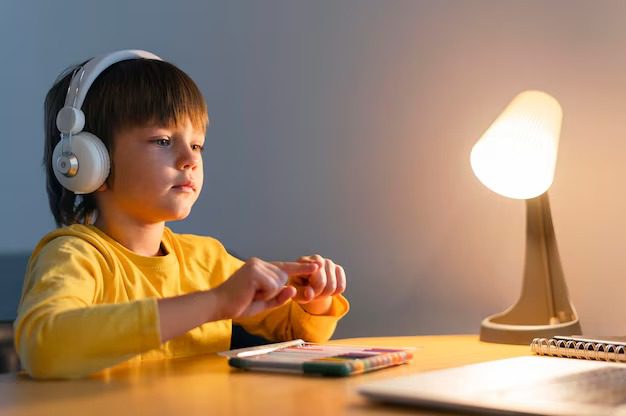
3. The Transition Period Matters
One subtle but important factor is the transition between screen time and focused work.
Expecting a child to immediately sit down and concentrate right after using a device is often unrealistic. The brain needs time to “cool down” from stimulation.
A short buffer like a walk, a snack, or even a few quiet minutes can help reset attention. This small habit can make a big difference in how easily a child settles into focused work.
4. The Power of Slowing Things Down
One of the biggest challenges children face today is staying with something long enough to understand it deeply. This is where breaking tasks into smaller parts can help, but not in a mechanical way.
Instead of overwhelming a child with “finish everything,” guiding them to focus on just one part at a time creates a sense of progress. When a child experiences completion, even in small doses, it builds confidence and encourages them to continue.
What matters here is not just productivity, but the feeling of “I can do this.”
5. Why Multitasking Weakens Focus
Another side effect of heavy screen use is the habit of constant switching between apps, videos, or tasks. While it may look like multitasking, the brain is actually just shifting attention rapidly.
This constant switching trains the brain to avoid staying with one thing for too long.
Encouraging children to do one task at a time may feel slow at first, but it strengthens deeper focus. Over time, they become more efficient, not because they are faster, but because they are more engaged.
6. Attention Needs Training, Not Pressure
It’s tempting to remind children constantly to “focus” or “pay attention.” But concentration doesn’t improve through pressure; it improves through practice.
Simple activities that require sustained attention can be surprisingly effective. Reading, drawing, building something with their hands, or even solving a puzzle trains the brain to stay engaged without constant stimulation.
These moments don’t need to feel like exercises. In fact, the less they feel forced, the more effective they are.
Why Boredom Isn’t the Enemy
Many parents feel uncomfortable when their child says, “I’m bored.” The immediate reaction is often to offer a screen or suggest an activity.
But boredom plays an important role in developing focus.
When children are not constantly entertained, they begin to explore, imagine, and create their own engagement. This is where longer attention spans begin to form. A child who learns to sit with boredom eventually learns to sit with effort, too.
In a way, boredom is the starting point of concentration.
The Role of Routine in Building Focus
Children may resist routine on the surface, but in reality, it gives their brain something it constantly looks for: predictability. How districts In a world filled with stimulation and constant change, a steady rhythm helps reduce internal chaos and makes focus easier to access.
Here’s how routine quietly strengthens concentration:
1. Reduces Mental Fatigue from Constant Decisions
When a child’s day is unstructured, they are constantly making small decisions: Should I study now? Can I play first? What do I do next?
This may seem minor, but decision-making uses mental energy. By the time they sit down to focus, they’re already a little drained.
A routine removes this friction. When study time, playtime, and rest follow a predictable order, the brain doesn’t have to negotiate every step; it simply follows a pattern. That saved energy can then be used for actual concentration.
2. Creates Strong Mental Associations with Focus
Consistency builds powerful cues in the brain.
If a child studies at roughly the same time and in the same space every day, the brain begins to associate that moment with focus. Initially, they may still resist, but over time, just sitting in that space at that time can trigger a “ready to concentrate” state.
This is how routine turns focus from something forced into something more automatic.
3. Makes Transitions Smoother and Less Stressful
A big reason children struggle with concentration isn’t the task itself; it’s the transition into it.
Switching from play or screen time to studying can feel abrupt. Without structure, this shift often leads to resistance or delay.
Routines help by creating predictable transitions. For example:
- A snack after school, before homework
- A short break before starting study time
- A consistent wind-down before bed
These small in-between moments act as buffers, helping the brain shift gears more smoothly.
4. Builds a Natural Daily Rhythm
Over time, routines create a flow to the day. The child begins to expect certain activities at certain times.
This rhythm reduces pushback. Instead of arguing or delaying, the child gradually adapts to the pattern. Focus becomes less of a struggle because it’s part of a familiar cycle, not an unexpected demand.
It’s similar to how adults operate. When work hours are fixed, we don’t debate starting work every day; we just begin.
5. Supports Better Sleep, Which Improves Focus
Routine doesn’t just affect study time; it plays a major role in sleep.
Consistent sleep and wake times regulate the body’s internal clock. When sleep is irregular, attention, memory, and mood all take a hit.
A simple, predictable night routine like dimming lights, reducing screen use, and winding down at the same time helps the brain prepare for rest. A well-rested child will always find it easier to concentrate.
6. Creates a Sense of Security and Control
Children feel more settled when they know what to expect. This sense of predictability reduces anxiety and restlessness, both of which interfere with focus.
When the day has a clear structure, the child doesn’t feel overwhelmed or uncertain. A calmer mind naturally leads to better concentration.
7. Works Best When It’s Flexible, Not Rigid
One common mistake is turning routine into a strict, hour-by-hour schedule. This can feel controlling and may lead to more resistance.
What works better is a flexible structure:
- Focus on the order of activities, not exact timings
- Allow room for breaks, mood shifts, and real-life changes
- Keep the routine consistent, but not suffocating
For example, “homework after a short break” is more sustainable than “homework at exactly 4:00 PM every day.”
8. Encourages Ownership and Cooperation
Children are more likely to follow routines when they feel involved.
Letting them make small choices like deciding the order of tasks or picking break activities gives them a sense of control. This reduces resistance and builds cooperation over time.
Routine then becomes something they participate in, not something imposed on them.
Building Focus That Lasts
Helping your child build concentration in a screen-heavy world isn’t about quick fixes or strict rules; it’s about shaping habits that gently guide their attention back to what truly matters. From creating the right environment and establishing routines to understanding how the brain responds to stimulation, every small step contributes to a bigger shift.
The goal isn’t to eliminate screens, but to ensure they don’t take control. When children learn how to manage their attention, they gain a skill that goes far beyond academics—it impacts how they think, learn, and engage with the world.
How UCMAS Helps?
Structured cognitive programs like UCMAS can make a meaningful difference. Through techniques rooted in visualization and mental calculation, children are trained to use both sides of the brain, improving not just mathematical ability but also concentration, memory, and listening skills. The repetitive yet engaging nature of abacus-based math learning strengthens attention span over time, helping children stay focused longer without mental fatigue.
More importantly, it builds discipline in a way that feels rewarding. Children begin to experience what sustained focus feels like, and once they do, it becomes easier to apply that same focus to other areas of learning.
In a world designed to distract, giving your child the tools to concentrate is one of the most valuable investments you can make.
Boost your child’s focus, memory, and brain power with abacus-based learning—start today!
Frequently Asked Questions (FAQs)
Build simple habits—consistent routine, distraction-free study time, and shorter tasks. Focus improves when work feels manageable and predictable.
Yes. Fast-paced screens train the brain to expect instant rewards, making slower tasks harder. Balance and structured use are key.
Reading, puzzles, memory games, and creative activities help build concentration. Consistency matters more than complexity.
Programs like UCMAS (Abacus/AA) train children to visualize and calculate mentally, strengthening focus, memory, and attention span over time.