


The education franchise market offers exciting opportunities for entrepreneurs looking to build a business in a sector driven by consistent demand. From tutoring and enrichment programs to STEM, coding, abacus, and mental math, there are numerous concepts competing for the attention of both parents and investors.
But with more education brands entering the franchise market, prospective franchisees face an important question: Should you invest in an established education franchise or take a chance on a new brand?
A newer brand may offer fresh ideas, attractive investment terms, and the opportunity to become an early franchise partner. An established brand, however, brings years of experience, market presence, tested systems, and an existing reputation.
Understanding the difference between the two is essential before making a long-term investment decision.
How to Distinguish Between Established Brands and New Brands
The age of a brand alone does not determine whether a franchise is a good investment. A company may have existed for years but have limited franchising experience, while a newer company may have a strong business concept.
The real distinction lies in track record, market presence, franchise experience, systems, and evidence of performance.
When evaluating an education franchise, look beyond the promotional material and investigate:
- how long the brand has operated,
- how long it has been franchising,
- how many locations it has,
- where those locations are, and
- how consistently the business model has been implemented.
You should also examine the educational methodology. Is the curriculum established and structured? Has it been implemented across multiple markets? Does the franchisor have a defined training system for instructors and franchisees?
The franchise network is another useful indicator. An established brand will typically have a larger network of franchisees who can provide insights into their experiences with the franchisor.
Other factors worth examining include brand recognition, customer reviews, marketing infrastructure, technology, operational systems, franchisee support, and the franchisor’s long-term growth strategy.
In other words, don’t simply ask “How old is the brand?” Ask “How much experience has the brand accumulated, and how effectively has that experience been converted into a franchise system?”
Established Franchise vs. New Franchise: How Do They Compare?
An established education franchise and a new education brand can both offer attractive opportunities, but the nature of the investment is different.
Factor | Established Brand | New Brand |
Brand recognition | Already developed | Still building |
Market presence | Established | Emerging |
Business model | Tested and refined | May still be evolving |
Curriculum | Established methodology | Potentially new or developing |
Franchise support | Structured and experienced | May be developing |
Marketing systems | Existing resources and strategies | May require further development |
Franchisee network | Larger and more experienced | Smaller and growing |
Innovation | Proven systems with ongoing improvements | Greater potential for experimentation |
Territory availability | May be more limited | May offer more opportunities |
Uncertainty | Generally lower | Generally higher |
This doesn’t mean every established franchise is automatically better than every new brand. The quality of the franchisor remains critical.
However, established brands have an important advantage: they have a history that prospective franchisees can evaluate.
You can examine their growth, franchisee network, market presence, customer response, and operating history before committing.
With a new brand, much of the investment decision may be based on what the brand could become.
The New Brand Advantage
New education brands have their own appeal.
Because they are still building their franchise network, emerging brands may offer more flexibility in areas such as territory selection, franchise fees, operational processes, and franchisee involvement.
Early franchisees may also have greater access to the founders and leadership team. Their feedback can influence the development of systems, marketing strategies, and future franchise policies.
Innovation is another potential advantage.
New brands may be built around emerging educational trends, technology, changing parent expectations, or specialized learning needs. Without an established system to maintain, they may be able to adapt quickly.
There can also be an opportunity to enter a market before the brand becomes widely established.
However, these advantages come with a trade-off: greater uncertainty.
A new franchisor may still be refining its curriculum, operational processes, marketing strategy, training systems, and franchise support structure. Early franchisees may therefore become part of the process of building and testing the franchise model.
For experienced entrepreneurs who enjoy taking calculated risks, this can be attractive.
For first-time franchise owners looking for a structured path, however, the additional uncertainty may be less appealing.
Why Established Brands Have a Greater Hold on the Market
The biggest strength of an established education franchise is its ability to leverage trust, recognition, experience, and consistency.
In education, these factors are particularly important.
Parents want confidence in the program they choose for their children. They want to know that the methodology is credible, instructors are properly trained, and the learning experience is consistent.
An established brand has had time to build that confidence.
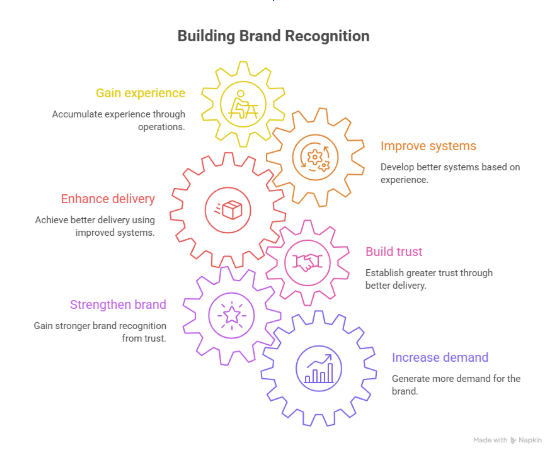
As the brand expands, its experience can strengthen its operational systems, training, curriculum, marketing, and customer engagement.
The franchisee benefits from that accumulated knowledge.
An established brand may also have a stronger marketing presence. Existing brand assets, digital visibility, promotional campaigns, customer testimonials, and local market experience can make it easier for franchisees to introduce the program to prospective customers.
The size of the franchise network matters as well.
More locations mean more opportunities to identify challenges, develop solutions, share best practices, and understand what works across different markets.
This creates a significant competitive advantage that a new brand cannot immediately replicate.
How to Make an Informed Decision Between the Two
Choosing between an established and new education franchise should never be based solely on the franchise fee, popularity, or promises of future growth.
Start by understanding your own investment priorities.
Are you looking for a structured business model or greater flexibility? Are you comfortable with uncertainty? Do you have experience building a brand? How much time can you dedicate to developing marketing and operational systems? What level of franchisor support do you need?
Once you understand your priorities, evaluate the franchise opportunity against several key criteria.
Examine the Track Record
Look at how long the brand has operated and how long it has been franchising. Consider the number and longevity of franchise locations rather than focusing only on the total number of centers. A large network is useful, but sustainable growth is more important than rapid expansion.
Speak to Existing Franchisees
Currently active franchisees can provide valuable insights into the actual franchise experience.
Ask about training, support, marketing, communication, operational challenges, and their overall relationship with the franchisor.
Their experiences can help you determine whether the promises made during the sales process translate into reality.
Evaluate the Educational Product
The quality of the curriculum should be one of your highest priorities. Look at the methodology, learning structure, instructor training, assessment process, teaching resources, and evidence of long-term development.
A franchise is only as strong as the value it provides to its customers.
Understand the Complete Investment
Don’t compare brands based only on the initial franchise fee. Consider the full investment, including setup, equipment, staffing, training, marketing, working capital, royalties, technology, and other ongoing expenses.
The objective should be to understand the total cost of ownership and the resources required for successful operation.
Assess the Support System
Find out what happens after you sign the agreement. Does the franchisor provide initial and ongoing training? Is marketing support available? Who helps with center operations? Is technology provided? How frequently does the franchisor communicate with franchisees?
Strong ongoing support can be particularly valuable for entrepreneurs entering the education industry for the first time.
Evaluate the Market
Finally, consider whether there is genuine demand for the program in your chosen territory. A strong brand cannot compensate for poor market selection.
Study the local population, target demographics, competition, schools, demand for after-school education, and potential customer base before making your decision.
Experience Can Be Your Competitive Advantage
A new education franchise can offer innovation, flexibility, and the excitement of being an early investor. For entrepreneurs with a higher appetite for risk, those opportunities can be worth exploring.
But an established education franchise offers something that takes years to build: market credibility, tested systems, accumulated experience, and an established support network.
When you invest in an established brand, you are not simply buying a franchise name. You are gaining access to the lessons, systems, processes, and knowledge developed over years of operation.
For many entrepreneurs, particularly those entering the education sector for the first time, that foundation can make the journey more structured and manageable.
Ultimately, the right choice isn’t the brand with the newest idea or even the oldest name. It is the franchise that offers the strongest combination of educational value, business systems, market demand, franchisor support, and long-term potential.
And when experience, consistency, and trust matter, an established education franchise can give you a significant head start.
UCMAS: 30+ Years of Experience Behind Your Business
When choosing between a new education brand and an established franchise, experience matters. UCMAS brings more than 30 years of experience in abacus-based education and mental arithmetic, giving franchisees the advantage of joining a brand with an established educational foundation rather than building one from scratch.
Founded in 1993, UCMAS is one of the best education franchises and has grown from a single educational concept into a global network serving children across numerous countries. Over the years, the program has reached millions of students and established thousands of centers worldwide, demonstrating that its methodology can be implemented across diverse markets and communities.
What makes this particularly valuable for franchisees is that UCMAS offers more than a recognized name. Its established franchise system includes a proprietary educational methodology, structured curriculum, training, operational guidance, and marketing support. The program is designed around abacus and mental arithmetic while helping develop skills such as concentration, memory, visualization, and problem-solving.
For an entrepreneur entering the education sector, this established infrastructure can significantly reduce the need for trial and error. Instead of developing a curriculum, building a brand, and creating operational systems from the ground up, franchisees can leverage decades of experience and focus on growing their local center.
With UCMAS, you’re not starting an education business from scratch; you’re building on more than three decades of educational experience and an established global franchise network. Join the winning franchise network; request a consultation call today!
Frequently Asked Questions
An established franchise is often the better choice for entrepreneurs seeking a proven business model, brand recognition, structured support, and lower uncertainty. A new brand may offer innovation and flexibility but typically comes with more unknowns.
Generally, an established franchise can involve less uncertainty because its business model, systems, curriculum, and market presence have already been tested. However, no franchise is risk-free, and success still depends on factors such as location, management, demand, and execution.
Key advantages include an established brand, proven educational methodology, structured training, marketing support, operational systems, an experienced franchisee network, and access to knowledge developed over years of operation.
Yes. New brands may provide greater territory availability, innovative concepts, flexible systems, and the opportunity to grow alongside an emerging brand. However, this potential usually comes with greater uncertainty.
Evaluate the franchisor’s track record, franchise agreement, total investment, ongoing fees, territory, curriculum, training, marketing support, franchisee feedback, market demand, and long-term growth strategy.
They are extremely important, particularly for first-time franchise owners. Brand recognition can help establish credibility with customers, while strong franchise support can provide guidance in areas such as training, marketing, operations, and business development.
An established franchise may be more suitable for first-time owners because it generally provides greater structure, established systems, training, and support. This can reduce the need to develop the business model independently.
Investors should look beyond the franchise fee and assess the complete opportunity. Consider the educational program, brand reputation, franchisor experience, support system, market demand, competition, territory, total investment, and long-term business potential before making a decision.