

Every parent knows that quiet moment. You watch your child studying at the table, staring at a notebook that feels far heavier than it should. You tell yourself, “Maybe they’re just tired. Maybe tomorrow will be better.”
But deep down, there’s a small ache of worry.
Your child is bright. Curious. Full of potential. So why does learning sometimes feel like a struggle? Why does confidence fade when schoolwork appears?
The truth is, school does its best to educate children, but it cannot always strengthen how a child thinks. And that difference matters more than we realize. When children struggle with focus, memory, processing speed, or confidence, the issue is often not intelligence. It is a gap in core brain skills.
This is where brain skill training for kids becomes essential. Not as pressure. Not as competition. But as support. Because every child deserves the tools to think clearly, learn joyfully, and believe in themselves.
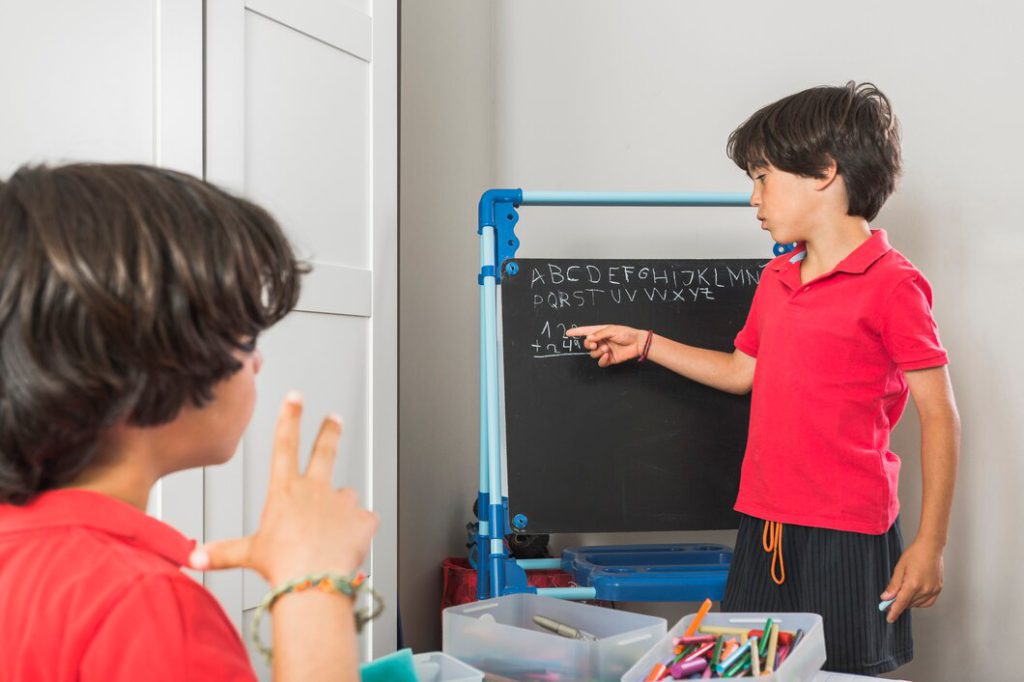
How to Determine If Your Child Has Learning Challenges or Learning Gaps
Learning challenges are not always obvious. Some children score average or even above-average marks but struggle internally. Others work extremely hard yet show minimal improvement. These situations often indicate learning gaps.
Learning gaps occur when core cognitive skills are underdeveloped. For example, a child may know multiplication tables but struggle to solve word problems because their brain cannot visualize numbers or process information efficiently. Another child may read fluently but fail to comprehend meaning due to weak memory or attention span.
Common examples of learning gaps include:
- A child who understands a concept in class but forgets it by evening
- A child who needs instructions repeated multiple times
- A child who avoids subjects that require logical thinking or speed
- A child who panics during exams despite knowing the answers
These challenges are not signs of low intelligence. They are indicators that the brain needs structured cognitive training to strengthen how information is received, processed, and applied.
7 Signs Your Child Needs Brain Skill Training Beyond School
1. Difficulty Maintaining Focus and Attention
If your child struggles to stay seated during homework, gets distracted by the slightest noise, or jumps from one task to another without completing any, it often points to underdeveloped concentration skills. Focus is not a behavior issue; it is a brain skill that determines how long and how deeply a child can engage with learning.
For example, a child may read the same paragraph repeatedly but still be unable to explain what it means, or they may take frequent breaks because their mind feels tired too quickly. Brain skill training for kids strengthens sustained attention by gradually training the brain to stay alert, engaged, and present for longer periods. This improvement naturally reflects in better classroom participation and more productive study time at home.
2. Dependence on Rote Learning Instead of Real Understanding
Some children appear to be doing well because they memorize answers accurately, yet struggle the moment a question is phrased differently. This indicates surface-level learning without true comprehension. The brain is storing information temporarily rather than processing it meaningfully.
For instance, a child may remember a math formula perfectly but freeze when asked to apply it to a word problem or real-life situation. Cognitive training for children develops reasoning, logic, and conceptual clarity, helping them understand why an answer works instead of merely recalling what the answer is.

3. Slow Processing Speed
Processing speed refers to how efficiently the brain takes in information, understands it, and responds. Children with slow processing speed often know the material but struggle to keep up with time-bound tasks.
A common example is a child who understands math concepts during practice but cannot complete tests within the allotted time. This can lead to unnecessary pressure and lowered confidence. Brain training exercises improve mental agility and response time, enabling children to think faster, organize their thoughts better, and answer with clarity without feeling rushed or overwhelmed.
4. Weak Mental Math and Poor Number Sense
Children who rely heavily on fingers, paper, or calculators for basic calculations often lack strong number sense. They find it difficult to visualize numbers and relationships between them, which makes math feel intimidating and effortful.
For example, even simple addition or subtraction may take excessive time, leading to frustration and self-doubt. Programs focused on brain skill training for kids, such as abacus-based learning, strengthen numerical visualization by training the brain to see and manipulate numbers mentally. This not only improves math ability but also boosts logical thinking and confidence across subjects.
5. Poor Memory and Recall
Memory plays a crucial role in learning, extending beyond mere memorization of facts. It includes retaining instructions, recalling information when needed, and applying learned concepts accurately.
A child with weak memory may study spelling words repeatedly but forget them during tests, or forget instructions given just a few minutes earlier. Cognitive training strengthens working memory, allowing children to store information more effectively, retrieve it faster, and apply it with greater accuracy. This results in smoother learning and reduced repetition.
6. Low Confidence and Fear of Making Mistakes
When children experience repeated difficulties despite their efforts, they begin to doubt their abilities. This often shows up as hesitation to answer questions in class, fear of exams, or avoidance of challenging tasks.
This lack of confidence is not an emotional weakness. It is the result of cognitive overload, where the brain feels unable to cope with demands. Brain skill training builds confidence by improving mental clarity and control, helping children trust their thinking and respond without fear. As skills strengthen, confidence naturally follows.
7. Emotional Resistance to Learning
When learning consistently feels difficult, children may develop emotional resistance. Homework becomes a daily struggle marked by anger, tears, excuses, or complete withdrawal.
For example, a child may complain of headaches, boredom, or tiredness whenever study time begins. This reaction often stems from mental fatigue rather than a lack of interest. Once thinking becomes easier through cognitive training, the emotional burden lifts. Learning feels less threatening, curiosity returns, and children approach studies with a calmer and more positive mindset.
Each of these signs is not a label or a limitation. They are signals that your child’s brain needs structured support. With the right brain skill training, children don’t just cope with school; they thrive within it and beyond.
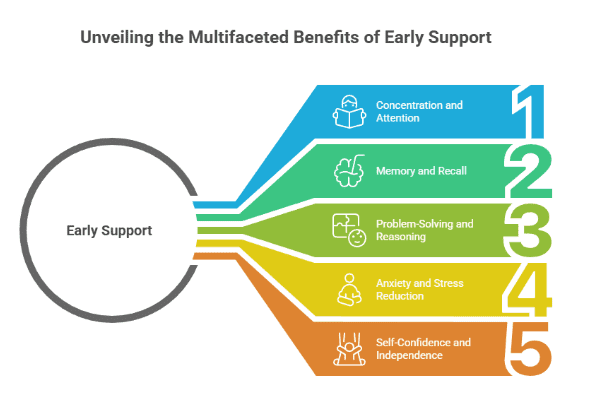
Benefits of Identifying the Need Early and Supporting Your Child
Identifying the need for brain skill training early prevents long-term academic and emotional struggles. When children receive the right support at the right time, the results are transformative.
How Parents Can Help: Supporting Your Child Beyond the Classroom
Parents play a crucial role in identifying challenges early and creating an environment where children feel supported rather than pressured. While schools focus on curriculum, parents influence mindset, habits, and emotional safety around learning. Small, intentional actions at home can make a powerful difference.
1. Observe Without Judging
Pay close attention to how your child learns, not just their grades. Notice patterns: when they lose focus, which subjects cause stress, or when confidence drops. Avoid labels like “lazy” or “weak in studies.” Instead, see these moments as signals that your child’s brain needs support, not criticism.
2. Create a Calm and Consistent Learning Routine
Children’s brains thrive on structure. A fixed study time, a clutter-free learning space, and short, focused sessions help reduce mental overload. For example, breaking homework into 20–30 minute blocks with short breaks improves attention and reduces frustration.
3. Encourage Thinking, Not Just Answers
When your child gets an answer wrong, resist the urge to correct immediately. Ask guiding questions like, “How did you think about this?” or “What made you choose this answer?” This builds reasoning skills and shows your child that effort and thinking matter more than perfection.
4. Reduce Comparison and Performance Pressure
Constant comparison with siblings, classmates, or toppers can damage confidence and motivation. Every child’s brain develops differently. Celebrate progress, not just results. When children feel emotionally safe, their brains are more open to learning.
5. Support Brain Skill Development Actively
Introduce activities that strengthen cognitive skills, such as puzzles, mental math games, worksheets, memory challenges, sequencing activities, or visualization exercises. Structured math programs focused on brain skill training for kids provide guided and systematic cognitive development that is difficult to achieve through schoolwork alone.
6. Be Patient With Emotional Responses
If your child resists homework or shows emotional outbursts, respond with empathy. Statements like “I see this is hard for you” or “Let’s figure this out together” help reduce anxiety. Emotional regulation improves naturally when cognitive load decreases.
7. Seek the Right Support at the Right Time
Most importantly, know when to seek additional help. Enrolling your child in cognitive training programs is not a sign of weakness; it is a proactive step toward building lifelong thinking skills. Early support prevents long-term struggles and helps children rediscover confidence and joy in learning.
How UCMAS Supports Structured Learning and Cognitive Development
Programs like UCMAS are specifically designed to bridge cognitive gaps in a structured, progressive, and child-friendly way. Unlike traditional tuition that focuses on repeating academic content, UCMAS focuses on strengthening the brain itself—the engine behind all learning.
At the core of UCMAS is the abacus, used not as a calculation shortcut but as a powerful brain-training tool. Children begin with physical bead movements, which gradually transition into mental visualization. This shift activates both the left and right hemispheres of the brain, promoting balanced brain development and enhanced cognitive function.
Through consistent and guided practice, UCMAS strengthens multiple cognitive skills simultaneously:
- Children learn to focus deeply for sustained periods, a skill that naturally carries over to classroom learning and exams.
- Remembering calculation steps, patterns, and sequences strengthens working memory and recall ability.
- Numbers are imagined, moved, and manipulated mentally, enhancing imagination and abstract thinking.
- Mental processing becomes faster and sharper, helping children respond confidently under time pressure.
When children learn how to think, not just what to learn, success follows naturally. UCMAS equips children with the mental strength to approach learning with clarity, confidence, and curiosity, making it one of the most valuable investments you can make in your child’s future. Enroll now!
FAQs
Not at all. Many children work hard but struggle because their core brain skills, like focus, memory, or processing speed, are underdeveloped. This has nothing to do with intelligence and everything to do with how the brain processes information.
Tuition focuses on what your child learns, often repeating school content. Brain skill training focuses on how your child learns by strengthening concentration, memory, visualization, and thinking speed, skills that improve performance across all subjects.
The earlier, the better. Children’s brains are most adaptable between the ages of 5 and 13. Introducing structured cognitive training during these years builds a strong foundation that supports learning throughout school and beyond.
No. While programs like UCMAS use math as a tool, the benefits extend to reading comprehension, writing, listening skills, problem-solving, and everyday decision-making. Parents often notice overall improvement in confidence and clarity.
Many parents notice changes in focus, confidence, and attitude toward learning within a few months. Cognitive development is gradual, but consistent training leads to long-term and lasting improvement.
Yes. Exam anxiety often stems from mental overload and lack of confidence. Brain skill training improves mental clarity and speed, helping children feel more prepared and in control during tests.
If your child struggles with focus, memory, mental math, confidence, or learning stress, despite the effort, UCMAS can help. It is designed to strengthen the brain’s core skills, making learning easier, faster, and more enjoyable.