

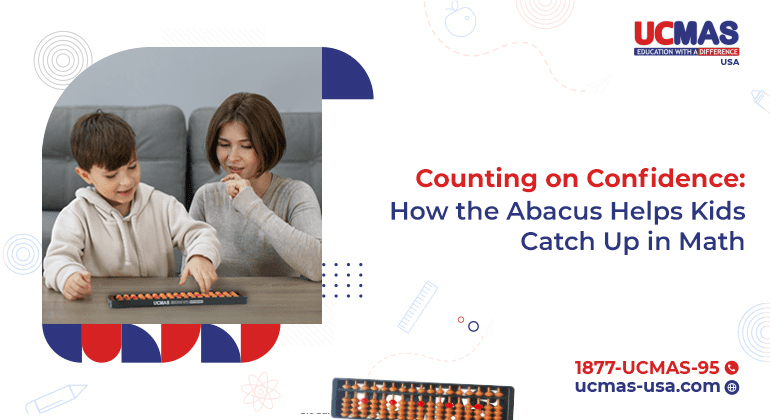
Not all children start their learning journey from the same place. Some grasp numbers intuitively, while others struggle to keep up, despite equal effort, good teaching, and supportive homes. These early differences in math understanding often go unnoticed or are brushed off as “normal,” but over time, they can widen into what we call the achievement gap.
In early mathematics, this gap doesn’t just affect grades. It impacts a child’s confidence, problem-solving ability, classroom participation, and even their attitude toward learning itself. The good news? When identified early and addressed with the right tools, the achievement gap can be significantly reduced, if not closed altogether.
One such powerful tool is abacus-based learning. Far more than a traditional counting device, the abacus builds foundational math skills, strengthens the brain, and empowers children to learn at their own pace. Let’s explore how and why abacus training plays a crucial role in bridging the achievement gap in early mathematics.

What Is the Achievement Gap in Early Mathematics?
The achievement gap refers to the persistent difference in academic performance between groups of students. In early mathematics, this gap often shows up as differences in:
- Number sense and mental math skills
- Speed and accuracy in calculations
- Ability to understand math concepts rather than memorize steps
- Confidence when solving problems
These gaps may exist between students from different socio-economic backgrounds, learning environments, or even within the same classroom. What’s important to understand is that the gap is not about intelligence. More often, it stems from differences in exposure, learning methods, attention development, and cognitive readiness.
If left unaddressed in the early years, math achievement gaps tend to widen as children move into higher grades, where math becomes more abstract and cumulative.
How to Identify Signs of an Achievement Gap in Young Children
Spotting an achievement gap early is key. Parents and teachers should look beyond test scores and observe how a child approaches math. Some common signs include:
1. Difficulty Understanding Basic Number Concepts
A child may struggle with counting, place value, or recognizing number patterns even after repeated instruction.
2. Slow or Inaccurate Calculations
Taking significantly longer than peers to solve simple addition or subtraction problems, or making frequent errors.
3. Reliance on Memorization Instead of Understanding
Children may remember steps temporarily but fail to apply concepts in new or slightly altered problems.
4. Low Confidence and Math Anxiety
Avoiding math tasks, giving up quickly, or expressing fear or frustration when faced with numbers.
5. Poor Focus During Math Activities
Difficulty concentrating during math lessons or homework, especially tasks involving multiple steps.
Recognizing these signs early allows parents to intervene with learning methods that strengthen fundamentals instead of increasing pressure.

What Is Abacus Learning?
The abacus, as we all know, is an ancient mathematical tool that uses beads to represent numbers and calculations. While it may look simple, modern abacus programs, especially structured ones like UCMAS, use it as a brain development tool, not just a calculating aid.
Children begin by physically moving beads to perform calculations. Over time, they transition to a mental abacus, visualizing the beads in their minds to solve problems quickly and accurately. This process activates both the left and right hemispheres of the brain, leading to stronger cognitive development.
Unlike rote learning, abacus education focuses on understanding numbers, visualizing quantities, and building mental agility, all of which are critical for closing achievement gaps in math.
How the Abacus Helps Bridge the Achievement Gap in Early Mathematics
1. Builds Strong Number Sense from the Ground Up
Many early math difficulties stem from weak number sense—the ability to understand what numbers actually represent, how they relate to each other, and how quantities change. When number sense is fragile, children may memorize answers but fail to understand why those answers work.
Abacus learning strengthens number sense by allowing children to see, touch, and manipulate numbers physically.
For example, when a child adds 7 + 5 on an abacus, they don’t just write down “12.” They move beads, see one set combine with another, and experience the idea of “making ten and adding the remainder.” This makes abstract ideas tangible. |
For a slower learner who struggles to grasp place value, the abacus visually separates units, tens, and hundreds, helping them understand why 23 is different from 32. At the same time, faster learners can move quickly through more complex calculations, reinforcing their understanding at a deeper level. This shared foundation allows all children, regardless of their starting point, to progress with clarity and confidence.
2. Encourages Conceptual Learning Over Memorization
Traditional math instruction often relies heavily on memorization: formulas, steps, and shortcuts. While memorization may help in the short term, it can widen achievement gaps when children are unable to apply those steps to unfamiliar problems.
Abacus learning shifts the focus from memorizing how to solve a problem to understanding how numbers behave.
For instance, instead of memorizing that “borrowing” is required in subtraction, children using an abacus physically exchange beads from one column to another. This helps them understand why borrowing happens. |
As a result, when children encounter new or slightly different problems, such as word problems or multi-step calculations, they are better equipped to adapt. This conceptual clarity is especially powerful for children who previously struggled, as it removes the confusion and fear associated with “forgetting steps” and replaces it with logical understanding.
3. Improves Speed and Accuracy Equally
One common reason achievement gaps widen is the imbalance between speed and accuracy. Some children work quickly but make careless mistakes, while others are accurate but too slow to keep up with classroom expectations or timed tests.
Abacus training develops both simultaneously through structured, progressive practice. In the early stages, children focus on accuracy by carefully moving beads and understanding each calculation. As they advance, speed naturally increases—first with physical abacus use, then through mental visualization.
For example, a child who initially takes a long time to solve simple addition problems begins to recognize number patterns and bead movements intuitively. Over time, they can perform calculations mentally with both speed and precision. |
This balanced skill development helps children perform confidently in exams and classroom activities, reducing performance gaps caused by time pressure.
4. Enhances Focus and Attention Span
Sustained attention is a major challenge for many young learners, especially in math, where tasks often require multiple steps. Abacus practice naturally trains the brain to focus deeply and consistently.
When using an abacus, a child must coordinate their eyes, hands, and mind simultaneously. They need to follow instructions, track bead movements, and visualize numbers, leaving little room for distraction.
Over time, this repeated focus carries over into other areas of learning. Parents and teachers often notice that children who practice the abacus regularly are better able to concentrate during homework, listen attentively in class, and complete tasks without constant reminders. This improved attention span is especially beneficial for children who previously struggled to stay engaged in traditional math lessons.
5. Builds Confidence and Reduces Math Anxiety
Math anxiety is one of the biggest invisible contributors to the achievement gap. Children who believe they are “bad at math” often stop trying altogether, even when they are capable of improvement.
Abacus learning creates early and frequent success experiences, which are critical for building confidence. Because the abacus provides visual and physical feedback, children can see their progress clearly. Solving problems correctly, even complex ones, gives them a sense of achievement.
6. Supports Different Learning Styles
Not all children learn the same way, yet traditional classrooms often favor textbook-based and auditory instruction. Abacus learning stands out because it naturally supports multiple learning styles.
- Visual learners benefit from seeing numbers represented as bead patterns.
- Kinesthetic learners learn by physically moving beads and engaging their hands.
- Auditory learners benefit from verbal counting, rhythm, and guided instruction during practice.
For example, a child who struggles to understand numbers written on paper may grasp them instantly when they see quantities represented on an abacus. This inclusivity ensures that children who don’t thrive in conventional methods still have an effective pathway to understanding mathematics. |
By accommodating diverse learning styles, abacus training levels the playing field, ensuring that differences in learning preferences do not turn into long-term achievement gaps.
UCMAS Abacus Math: A Proven Approach to Closing Learning Gaps
UCMAS is a globally recognized abacus-based brain development program designed specifically for children aged 5 to 13.
What sets UCMAS apart is its structured, progressive approach that focuses on more than math alone. Through consistent abacus training, children develop:
- Strong mental math and arithmetic skills
- Improved memory, concentration, and visualization
- Faster information processing
- Better academic performance across subjects
UCMAS classrooms are designed to be interactive and engaging, allowing children to learn at their own pace without comparison or pressure. This individualized growth model is especially effective in narrowing achievement gaps, as children build skills steadily and confidently.
Over time, UCMAS students don’t just catch up; they often surpass expected grade-level performance in mathematics.

Why Early Intervention Matters
The earlier the achievement gap is addressed, the easier it is to bridge. Early childhood is a critical period for brain development, and tools like the abacus take advantage of this window by strengthening neural connections related to logic, reasoning, and memory.
Waiting until gaps become visible in grades or exams often means undoing years of frustration. Introducing abacus learning early helps prevent gaps from widening and equips children with skills that support lifelong learning.
Start Your Child’s Journey Today
Every child deserves the chance to feel confident and capable in mathematics. The achievement gap is not a life sentence; it’s a signal that a child needs the right learning approach.
At UCMAS, we don’t just teach children how to calculate; we teach them how to think, focus, and believe in themselves. Whether your child is struggling with math or simply needs a stronger foundation, starting early can make all the difference.
Give your child the tools to bridge the gap and build a brighter academic future. Start their abacus journey today. Enroll Now!
FAQs
Yes. Abacus learning is highly effective even for children who are already behind because it rebuilds math understanding from the basics rather than pushing grade-level content. By strengthening number sense and mental clarity, children often catch up faster and regain confidence, making it easier for them to engage with school math again.
While every child learns at their own pace, many parents notice improvements in focus, calculation accuracy, and confidence within a few months of regular abacus practice. Long-term benefits, such as faster mental math and stronger problem-solving skills, develop steadily with continued training.
No. Abacus learning complements school math rather than conflicting with it. It strengthens core skills like mental calculation and logical thinking, which help children understand school concepts more easily—regardless of the teaching method used in their classroom.
Yes. Abacus math training naturally improves concentration because it requires coordinated thinking, listening, and movement. Many children who struggle with attention show noticeable improvements in their ability to focus, follow instructions, and complete tasks after consistent abacus practice.
Absolutely. Abacus Math is not only for children who struggle. Advanced learners benefit from greater speed, accuracy, and mental agility, enabling them to solve complex problems more quickly and develop a deeper understanding of numbers beyond their grade level.
Parents can support their child by encouraging short, regular practice sessions, celebrating effort rather than speed, and maintaining a positive attitude toward math. Consistency and encouragement at home greatly enhance the benefits of structured abacus programs.