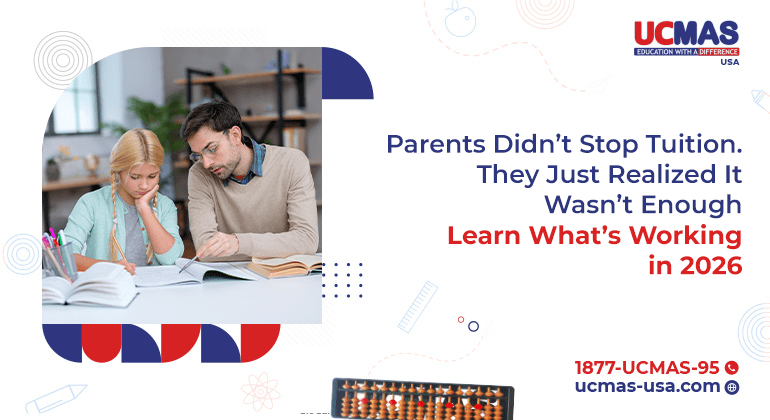
For years, tuition classes were the default choice for parents who wanted their children to do better academically. More homework, more revisions, more practice — that was the formula. But today, something has changed.
Parents are asking deeper questions. Is my child just memorizing answers, or actually understanding concepts? Can they focus better? Think faster? Solve problems independently?
This shift is exactly why skill based learning centers are gaining massive trust among parents — and why programs like UCMAS are becoming preferred choices over traditional tuition.
Let’s explore what’s driving this change and why it’s reshaping the future of after-school education.

What Today’s Parents Really Expect From Learning Programs
Modern parents are more involved, more informed, and far more outcome-driven than ever before. Academic scores still matter — but they’re no longer the only benchmark of success.
Academic Scores Are No Longer the Only Benchmark
Parents have realized that marks alone don’t guarantee confidence, clarity, or long-term success. A child may score well but still struggle with focus, logical reasoning, or applying concepts independently. That gap has made parents rethink whether tuition alone is truly enough.
Focus on Long-Term Skill Development
Instead of short-term exam results, parents now look for skills that compound over time — concentration, memory, analytical thinking, and mental agility. This is where after school learning centers with structured skill development programs stand out.
Demand for Measurable Progress, Not Just Homework Completion
Completing worksheets isn’t the same as progress. Parents want to see changes — quicker thinking, better attention spans, improved confidence. Skill-based programs offer defined milestones and visible outcomes, making progress easier to track and trust.

Skill-Based Learning vs Rote Tuition — The Core Difference
The biggest difference between tuition classes and skill-based programs lies in one simple idea: what is being developed — answers or abilities?
How Tuition Classes Reinforce Memorization
Traditional tuition focuses on syllabus coverage and exam preparation. While this helps in scoring, it often relies heavily on repetition and memorization. Learning becomes reactive — students prepare for tests rather than building understanding.
How Skill-Based Centers Build Thinking Abilities
Skill based learning centers shift the focus to how a child thinks. Programs are designed to strengthen cognitive functions like memory, visualization, and reasoning. Learning becomes active, engaging, and application-oriented rather than repetitive.
Confidence, Independence, and Application-Based Learning
When children understand concepts deeply, their confidence grows naturally. They attempt problems independently, participate more actively in class, and approach challenges without fear — outcomes parents notice very quickly.
The table below explains the difference between skill-based and rote learning:
Aspect | Skill-Based Learning Centers | Traditional Tuition Classes |
Learning Approach | Focuses on how a child thinks and learns | Focuses on what a child needs to memorize |
Primary Goal | Build core skills like focus, memory, reasoning, and problem-solving | Improve exam scores and complete syllabus |
Teaching Style | Activity-based, application-driven, and interactive | Lecture-based with repetition and practice |
Child’s Role | Active participant in the learning process | Passive listener following instructions |
Skill Development | Emphasizes long-term cognitive and life skills | Limited to subject-specific academic improvement |
Confidence Building | Encourages independent thinking and decision-making | Often dependent on teacher guidance and answers |
Learning Outcomes | Visible improvement in concentration, speed, and confidence | Short-term score improvement with limited retention |
Adaptability | Skills apply across subjects and real-life situations | Learning is largely restricted to exams |
Parent Visibility | Clear milestones and observable behavioral changes | Progress measured mainly through test scores |
Long-Term Impact | Prepares children for future learning and challenges | Supports immediate academic needs only |
Why Parents Trust Skill-Based Learning Centers More
Trust isn’t built through marketing claims — it’s built through changes parents witness at home and in school.
Visible Behavioral and Cognitive Changes
Parents often report improved concentration, better listening skills, and faster problem-solving abilities. Children become calmer under pressure and more confident while answering questions — benefits that go beyond academics.
Structured Programs With Clear Skill Outcomes
Unlike open-ended tuition cycles, skill-based programs follow a structured path. Parents know exactly what skills their child is developing and why those skills matter — whether it’s mental math, focus, or analytical ability.
Strong Parent Communication and Progress Tracking
Regular feedback, assessments, and progress updates help parents feel involved and informed. This transparency strengthens trust and reinforces the value of enrolling in reliable after-school learning centers.
Market Trends Driving the Rise of Skill-Based Learning
The growing preference for skill-based education isn’t accidental — it’s backed by global education trends and changing parental priorities.
Shift From Marks-Centric to Skill-Centric Education
Education systems worldwide are recognizing that future success depends on adaptability, problem-solving, and critical thinking. Parents are aligning with this mindset and choosing programs that build these core abilities early.
Growth of After-School Enrichment Programs
As school curriculums struggle to cover holistic development, enrichment programs have stepped in. Well-designed skill-based learning centers fill this gap by focusing on mental, cognitive, and personal growth beyond textbooks.
Parents Willing to Invest in Skill Development
Parents increasingly view skill development as an investment, not an expense. They are willing to spend on programs that deliver long-term value rather than temporary exam boosts.

Why This Shift Creates a Strong Franchise Opportunity
Where parent trust grows consistently, sustainable education businesses naturally follow.
Recession-Resilient Demand for Education Skills
Even during economic uncertainty, parents rarely cut back on meaningful education. Skill development is seen as future-proof, making these programs more resilient than traditional tuition models.
Scalable, System-Driven Learning Models
Established programs offer standardized curricula, teacher training, and operational support. This makes after-school learning centers easier to scale while maintaining quality across locations.
High Trust, High Retention Business Model
Skill-based programs typically enjoy longer student lifecycles and strong referrals. Once parents see results, retention rates increase — creating predictable, stable growth for center owners.
Why Skill-Based Learning Is the Future of Education
As careers evolve and classrooms change, one thing remains constant — children who can think clearly and adapt confidently will always have an edge.
Jobs will continue to evolve, but cognitive skills like focus, memory, and reasoning remain timeless. Learning how to learn is the real advantage skill-based education offers.
Tuition helps children prepare for exams. Skill-based learning helps them prepare for life — academically, emotionally, and intellectually.
Where UCMAS Fits Into This Shift
Programs like UCMAS are designed around this exact philosophy. Through scientifically structured mental development approaches such as the Abacus Mental Math Program, children build focus, speed, visualization, and confidence — skills that support every subject, not just math.
Why Parents Are Choosing Skills Over Shortcuts
Parents today are making intentional choices. They are moving away from repetitive tuition cycles and toward learning environments that shape how their children think, learn, and grow.
Skill-based learning isn’t a trend — it’s a shift in priorities. And after-school learning centers that deliver real outcomes are earning the trust that tuition classes no longer guarantee.
If you’re looking to build a meaningful, future-focused education business — one that parents actively seek and stay loyal to — UCMAS offers a proven, skill-driven model backed by decades of global success.
Explore this opportunity. Request for UCMAS franchise information today!
FAQs
Skill-based learning centers focus on developing core abilities like focus, memory, reasoning, and problem-solving rather than just completing school homework or exam prep.
Tuition classes mainly reinforce school syllabi, while skill-based programs strengthen how children think, learn, and apply concepts across subjects.
Yes, most after-school learning centers offer age-specific programs designed to match a child’s cognitive development and learning capacity.
Absolutely. Improved concentration, mental agility, and confidence naturally reflect in better classroom participation and academic performance.
Many parents notice positive changes in focus, confidence, and learning behavior within a few months of consistent participation.
Because the results are visible beyond marks—parents see lasting improvements in thinking skills, confidence, and independent learning.