

In this data-driven world where technology shapes almost every career path, the way children learn is rapidly evolving. Learning goes far beyond textbooks for students in California, where innovation and tech-driven industries are part of everyday life.
Two skills that are quietly becoming a powerful combination are mental math and coding. At first glance, they may seem unrelated; one deals with numbers, the other with computers. But dig a little deeper, and you’ll find that both are built on the same foundation: logic, structure, and the ability to solve problems.
Together, they don’t just make students smarter; they also build strong logical thinking skills and shape confident problem-solvers who are prepared for the future.
Across California, from Silicon Valley to local community learning centers, students are increasingly encouraged to learn programming at an early age. While many parents focus on enrolling their children in coding classes, one crucial skill often goes unnoticed: mental math.
Mental Math and Beyond
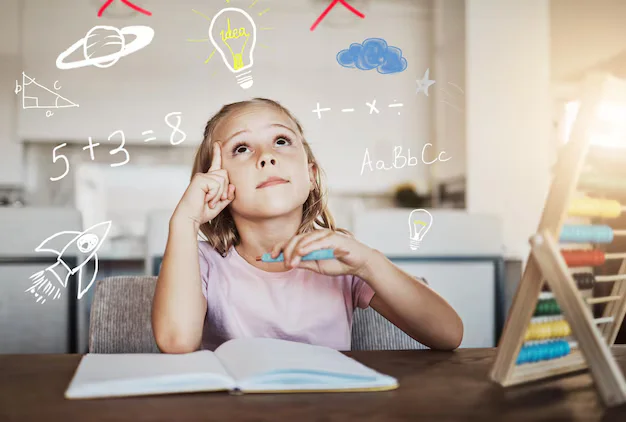
Mental math is the ability to perform calculations in the mind without relying on paper, calculators, or digital tools. At first glance, math and coding may seem like separate domains, one rooted in numbers and the other in technology. However, the truth is quite the opposite. Mental math strengthens the very cognitive abilities that coding demands.
For California students aiming to excel in coding, mental math acts as a powerful foundation. It sharpens logical thinking skills, enhances problem-solving abilities, and builds the mental agility needed to understand programming concepts with ease. This blog explores how mental math and coding are deeply interconnected and why developing both skills together can give students a significant edge.
The Relation Between Math and Coding
To understand how mental math complements coding, it’s important to first recognize the strong relationship between mathematics and programming.
At its core, coding is about solving problems using structured logic. Similarly, math is not just about numbers; it’s about understanding patterns, relationships, and processes. Both disciplines rely heavily on:
- Logical thinking
- Pattern recognition
- Sequential reasoning
- Analytical problem-solving
When a student writes code, they are essentially giving step-by-step instructions to a computer to solve a problem. This mirrors how mathematical problems are approached, breaking them down into smaller, manageable steps and applying rules to arrive at a solution.
How Does Mental Math Pave the Way for Coding Skills?
Mental math does more than just improve calculation speed; it rewires how students think. This shift in thinking is what makes it such a powerful tool for coding.
When students practice mental math, they engage in several cognitive processes that directly translate to programming skills.
1. Breaking Down Complex Problems
For instance, instead of calculating 48 + 27 directly, a student might think:
48 + 20 = 68 >>> 68 + 7 = 75
This habit of breaking down problems is exactly what coding requires. Large programming problems are always divided into smaller functions or steps before being solved.
2. Strengthening Working Memory
Coding often requires holding multiple pieces of information in mind: variables, conditions, outputs, and logic flow.
Mental math exercises train the brain to retain and manipulate information simultaneously, which strengthens working memory.
A student who can mentally calculate multi-step problems is better equipped to follow complex code structures. Their strong working memory allows them to read and write code more effectively, as they can “see” how the program unfolds without getting lost. Mental math acts as a training ground for this ability, making it easier to handle complex programming structures.
3. Enhancing Logical Thinking
At its core, mental math is not about memorization; it’s about strategy. Students learn that there are multiple ways to solve the same problem, and some methods are more efficient than others.
This kind of flexible thinking teaches students to:
- Evaluate different approaches
- Choose the most efficient path
- Adapt their strategy when needed
These are exactly the skills used in coding. Programmers constantly refine their code to make it faster, cleaner, and more efficient.
This process, known as optimization, is essentially logical thinking skills in action. Students who develop this mindset through mental math are better prepared to write elegant, efficient code rather than just functional code.
4. Improving Pattern Recognition
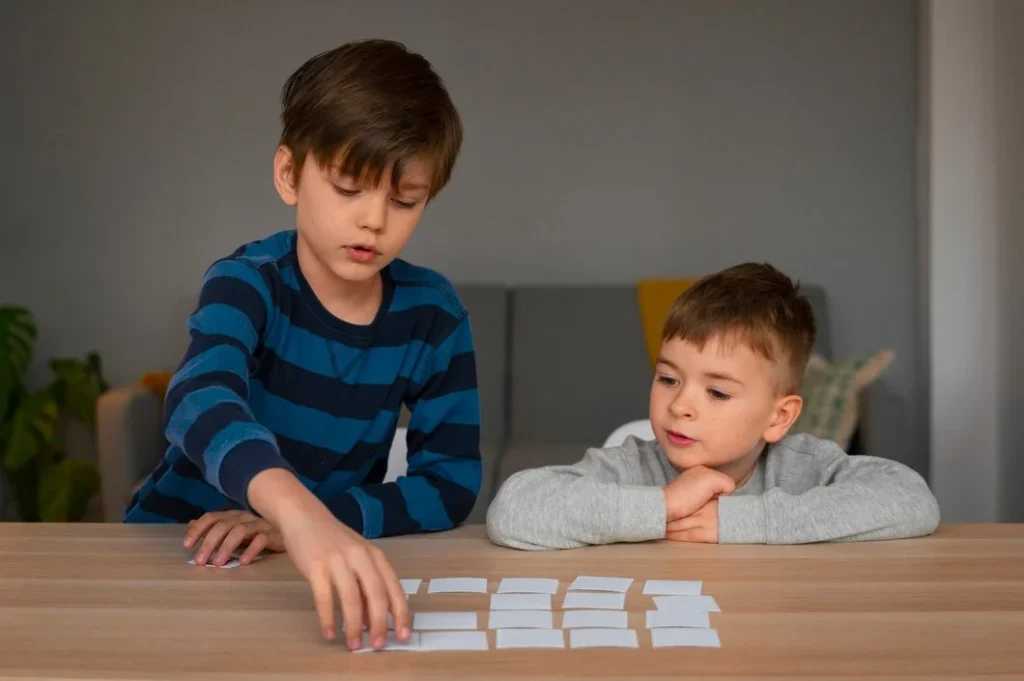
Recognizing patterns is a key part of both math and coding. Mental math helps students identify numerical patterns quickly, which in turn aids understanding of coding constructs such as loops, sequences, and algorithms.
5. Building Confidence in Problem-Solving
One of the biggest barriers students face in coding is the fear of getting it wrong or not understanding the logic. Mental math builds confidence by giving students quick wins and a sense of control over problem-solving.
As students practice mental math, they experience quick successes, improved speed and accuracy, and a sense of mastery over challenges. These small wins build confidence over time. Students begin to trust their thinking process and become less afraid of making mistakes.
This mindset carries directly into coding. Instead of feeling stuck or overwhelmed, confident students:
- Experiment with solutions
- Debug errors without frustration
- Approach challenges with curiosity rather than fear
They understand that problem-solving is a process, not a one-step answer.
Benefits of Mental Math for Students Who Want to Learn Coding
For California students preparing to enter a tech-driven future, combining mental math with coding education offers several long-term advantages.
1. Faster Computational Thinking
Computational thinking is the backbone of coding. It involves understanding a problem, breaking it down, and designing a solution.
Mental math accelerates this process by training the brain to think quickly and logically. Students become faster at analyzing problems and identifying solutions, which is crucial during coding tasks.
2. Improved Accuracy and Attention to Detail
Coding requires precision; even a small error can cause a program to fail. Mental math enhances attention to detail, as students must carefully track each step in their calculations.
This habit carries over into coding, reducing mistakes and improving debugging skills.
3. Stronger Algorithmic Thinking
Algorithms are step-by-step instructions used to solve problems in programming. Mental math inherently involves following sequences and steps, which mirrors algorithmic thinking.
Students who practice mental math are better at understanding how algorithms work and at creating their own.
4. Better Performance in STEM Education
California schools emphasize STEM (Science, Technology, Engineering, and Mathematics) learning. Mental math strengthens the “M” in STEM, creating a solid base for the “T” (Technology).
Students who are comfortable with numbers find it easier to grasp coding concepts, data structures, and even advanced topics like artificial intelligence later on.
5. Increased Learning Efficiency
When students rely less on calculators or external tools, they become more independent learners. Mental math reduces cognitive load, allowing students to focus on understanding coding concepts rather than struggling with basic calculations. This leads to faster learning and better retention.
6. Enhanced Problem-Solving Skills
Both coding and mental math are rooted in problem-solving. Students learn to approach challenges from different angles, experiment with solutions, and adapt when something doesn’t work. This flexibility is a critical skill not just in academics, but in real-world scenarios as well.

7. Boosted Confidence in Technology Learning
Many students hesitate to learn coding because they believe it’s too difficult or requires advanced math skills. Mental math helps bridge this gap by building foundational confidence. As students become more comfortable with numbers and logic, coding starts to feel more approachable and even enjoyable.
The UCMAS Advantage to Coders
In today’s technology-driven world, especially in a forward-thinking state like California, preparing students for the future goes beyond enrolling them in coding classes; it requires building the right cognitive foundation. This is where mental math proves to be a game-changer.
By strengthening logical thinking skills, improving memory, and enhancing problem-solving abilities, mental math equips students with the essential skills needed to excel in coding. When children learn to think analytically and approach problems with clarity, programming becomes less intimidating and far more intuitive.
The UCMAS mental math program plays a crucial role in this journey. Starting with abacus-based learning and gradually transitioning to advanced mental math techniques, UCMAS helps children develop concentration, visualization, and mental agility at an early age. These skills seamlessly translate into coding, enabling students to grasp complex concepts, write structured programs, and think like true problem-solvers.
Instead of treating math and coding as separate subjects, integrating them creates a powerful synergy that prepares students not just for academic success, but for real-world innovation.
Stop searching for math and coding classes near me, and give your child the advantage of a strong cognitive foundation. Enroll them in a UCMAS mental math program today!
FAQs
Yes. Mental math builds logical thinking, problem-solving, and memory—key skills needed for coding. It helps children break down problems and think step-by-step like programmers.
Parents who search for ‘coding classes near me CA’ usually find popular options like Code Ninjas, iD Tech, and Tynker. Choose programs that focus on hands-on learning and problem-solving.
Math teaches structured thinking, pattern recognition, and step-by-step reasoning—essential for solving problems efficiently.
Yes. Mental math builds thinking skills, while coding applies them. Together, they improve learning speed and confidence.
- Logical thinking
- Problem-solving
- Analytical reasoning
- Creativity
- Basic coding skills
Kids can start as early as 5–7 years with simple, game-based coding, and progress as they grow.
Programs like UCMAS improve concentration, memory, and visualization, helping children think faster and solve problems logically.