


Across classrooms in California, a silent barrier is holding many elementary school students back, not a lack of ability, but fear. This fear, commonly known as math anxiety, is becoming a widespread challenge that affects learning outcomes, confidence levels, and even long-term academic choices.
Math is a foundational skill, essential not just for academic success but for problem-solving in everyday life. Yet, for many young learners, math triggers stress rather than curiosity. Research shows that math anxiety can begin as early as elementary school and, if left unaddressed, may lead to long-term academic difficulties and reduced career opportunities in STEM fields. (Frontiers)
In California’s progressive education system, STEM learning, and critical thinking are emphasized, and addressing math anxiety early is crucial. This blog explores what math anxiety is, how to identify it, its causes, and, most importantly, how parents and educators can work together to overcome it.
What is Math Anxiety?
Math anxiety is more than just disliking math. It is a psychological response that causes fear, tension, or worry when dealing with numbers or mathematical tasks.
According to psychological research, math anxiety is a type of anxiety that arises specifically in math-related situations, such as solving problems, attending math class, or taking tests. (Healthline)
This anxiety can range from mild discomfort to intense fear, and it often interferes with a child’s ability to think clearly. In fact, studies show that math anxiety can reduce working memory, the mental space needed to solve problems, making even simple calculations feel overwhelming.
At a neurological level, math anxiety activates areas of the brain associated with fear and negative emotions, rather than logical reasoning. (PMC)
In simple terms, when a child feels anxious about math, their brain shifts from “thinking mode” to “survival mode.”
Symptoms of Math Anxiety
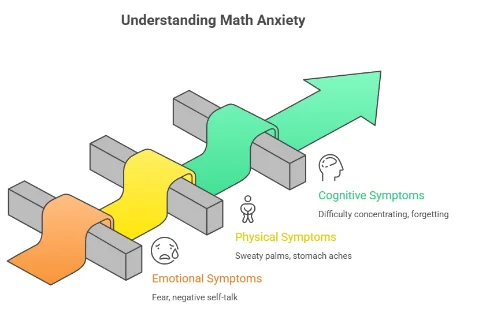
Math anxiety often goes unnoticed because it can be mistaken for a lack of interest or poor ability. However, the signs are both emotional and physical.
1. Emotional Symptoms
Emotional symptoms are usually the first to appear. Children may feel fear or dread even before a math class or a test begins. They often engage in negative self-talk, such as “I’m bad at math,” which can lower confidence over time. When faced with problems, they may quickly feel frustrated or helpless, giving up more easily than usual.
2. Physical Symptoms
Physical symptoms are real and noticeable. A child might experience sweaty palms, a racing heart, or stomach aches, especially before tests. During math activities, they may appear tense, restless, or anxious. These reactions are signs that the body is responding to stress, not that the child is avoiding work.
3. Cognitive Symptoms
Cognitive symptoms directly impact performance. Children may struggle to concentrate, forget concepts they already know, or find it hard to follow multi-step problems. Anxiety interferes with their ability to think clearly, making even simple tasks feel difficult.
These symptoms can create a cycle: anxiety leads to poor performance, which further increases anxiety. Over time, this can lower self-esteem and reduce a child’s willingness to engage with math altogether.
Causes of Math Anxiety
Understanding the root causes of math stress (kids) is key to solving the problem. Math anxiety doesn’t appear overnight; it develops due to a combination of experiences and influences.
1. Negative Early Experiences
Children who face repeated failure in math or who receive criticism from teachers or parents may begin to associate math with embarrassment or fear.
Even a single negative experience, like being scolded for a wrong answer, can leave a lasting impression.
2. Pressure to Perform
In competitive academic environments like California, students often feel pressure to achieve high scores. Timed tests, comparisons with peers, and performance expectations can trigger anxiety.
3. Teaching Methods
Traditional teaching methods that emphasize memorization over understanding can make math feel rigid and intimidating. When children don’t understand “why” something works, they lose confidence, and every encounter with math causes anxiety.
4. Lack of Strong Foundations
Gaps in basic concepts (like number sense or arithmetic) make advanced topics harder. This leads to frustration and avoidance.
5. Social and Cultural Influences
Statements like “math is hard” or “not everyone is a math person” can shape a child’s mindset. These beliefs create mental barriers even before the child attempts a problem.
6. Cognitive and Learning Differences
Conditions like dyscalculia or attention-related challenges can make math genuinely harder, increasing anxiety levels. (PMC)
Learn more about the diverse challenges of students with dyslexia and dyscalculia.
How to Overcome Math Anxiety
The good news is that math anxiety isn’t something a child is “stuck with.” It can be unlearned; gradually, gently, and with the right support. When children begin to feel safe, understood, and capable, their relationship with math can completely transform. Here’s how that shift can happen in a meaningful, lasting way:
1. Build a Positive Math Environment
For many children, math anxiety begins with fear; fear of being wrong, judged, or compared. That’s why the environment around them matters so much.
A positive math environment is one where mistakes are not punished but welcomed as part of learning. When children hear things like “That’s a good attempt” or “Let’s figure this out together,” they start to relax.
Celebrate small wins, even if it’s just solving one step correctly. Avoid comparing them with peers or siblings, as this often increases pressure rather than motivation. Over time, this safe space helps children participate more freely without the constant fear of failure.
2. Focus on Conceptual Understanding
Many children struggle with math because they’re taught what to do, but not why it works. This creates confusion and self-doubt.
When you shift the focus to understanding concepts, everything changes. For example, instead of memorizing formulas, relate math to everyday life—like calculating change while shopping or measuring ingredients while cooking.
Break problems into smaller, manageable steps and encourage children to ask questions. Curiosity is a powerful antidote to anxiety. When children truly understand what they’re doing, their confidence begins to build naturally.
3. Encourage Mental Math and Visualization
Mental math is more than just quick calculation; it’s about developing a strong sense of numbers. When children can visualize numbers and patterns in their minds, math becomes less abstract and more intuitive.
Start with simple mental calculations and gradually increase complexity. Visualization techniques, like imagining number lines or grouping numbers, can make problem-solving easier.
Tools like the abacus and worksheets can be especially helpful in the early stages. They provide a concrete way to understand numbers, which later transitions into strong mental math abilities. This process makes math feel interactive rather than overwhelming.
4. Reduce Pressure and Timed Stress
Speed is often mistaken for intelligence in math, but for anxious learners, timed tests can do more harm than good. They create panic, which blocks clear thinking.
Allow children to work at their own pace, especially when they’re still confidence-building. Focus on accuracy first; speed will come with practice. Replacing high-pressure tests with low-stakes exercises can make a huge difference in how children approach math tasks.
5. Use Gamified Learning
When math feels like a chore, children resist it. But when it feels like play, they engage without hesitation. Incorporate math games, puzzles, or even simple board games that involve numbers. Group activities and friendly challenges can also make learning more enjoyable.
This relaxed approach helps children practice math without realizing they’re “studying,” reducing anxiety and building familiarity at the same time.
6. Teach a Growth Mindset
One of the biggest barriers to overcoming math anxiety is the belief: “I’m just not good at math.” Children need to understand that ability is not fixed; it grows with effort and practice. Encourage them to replace “I can’t do this” with “I can learn this.”
Share stories of improvement and remind them that mistakes are not failures, but stepping stones. This shift in thinking is powerful; it helps break the cycle of fear and avoidance.
7. Address Emotional Barriers
Sometimes, math anxiety is more about emotions than about math. Fear, embarrassment, or past negative experiences can create a mental block.
Encourage children to talk about how they feel. Simple techniques like journaling or deep breathing can help them process anxiety. Even writing down their worries before a test has been shown to improve performance.
When children learn to manage their emotions, they approach math with a calmer, clearer mindset.
8. Provide Individual Support
Every child learns differently, and some may need extra help to regain confidence.One-on-one attention, whether through tutoring or guided support at home, can make a big difference. Personalized learning plans or small group sessions allow children to learn at their own pace without feeling overwhelmed.
The focus here shouldn’t just be on improving skills, but on rebuilding belief and confidence in their own abilities.
9. Train Teachers and Parents
Adults play a crucial role in shaping how children feel about math. A child often mirrors the attitudes of the people around them. Teachers can make math more engaging by using interactive and student-friendly methods. Parents, on the other hand, should be mindful not to pass on their own fears or negative experiences with math.
Encouragement, patience, and a positive attitude from both sides can create a strong support system that helps children overcome anxiety more effectively.
Overcoming math anxiety is not about pushing children harder; it’s about supporting them better. With patience, understanding, and the right strategies, children can move from fear to confidence, and eventually, to genuine enjoyment of math.
Help Your Child Overcome Math Anxiety the Right Way
Math anxiety isn’t a sign that your child isn’t smart; it’s usually a result of how they’ve experienced learning math. And the good part? That experience can be changed. When we recognize the signs early and respond rightly, math anxiety doesn’t hold your child back.
Programs like UCMAS are designed with exactly this in mind. Instead of pressuring children, they focus on building confidence step by step. Starting with the abacus and gradually moving into mental math, children learn to visualize numbers, think clearly, and solve problems in a way that actually makes sense to them.
What makes a real difference is how the program blends structure with encouragement. Children aren’t rushed or judged; they’re supported. As their skills improve, so does their belief in themselves. Over time, the fear they once felt around math is replaced with confidence, focus, and even enjoyment.
At the end of the day, it’s not just about getting the right answers. It’s about raising children who feel capable, who aren’t afraid to try, and who can approach challenges with a calm and confident mindset. Because when you remove the fear around math, you open the door to so much more.
Ready to help your child feel confident with math? Enroll Now to take the first step toward a stress-free learning journey.
Frequently Asked Questions (FAQs)
Math anxiety often develops from negative early experiences. This could include fear of making mistakes, pressure to perform quickly, or being compared to others. In some cases, teaching methods that focus more on memorization than understanding can leave children feeling confused and discouraged. Over time, these experiences build a belief that “math is hard,” which leads to anxiety.
Parents can create a relaxed, supportive environment where mistakes are okay. Encouraging effort, using real-life examples, and avoiding negative statements about math can help children feel more confident.
Yes, structured programs like UCMAS focus on the abacus and mental math to improve number sense, concentration, and confidence, key to reducing math anxiety.
Search for Math anxiety help – near me!
Common signs include avoiding math tasks, expressing negative beliefs (“I’m bad at math”), feeling nervous during tests, and even physical symptoms like headaches or stomach aches.
Abacus training makes math visual and hands-on, helping children understand numbers instead of memorizing them. As they transition to mental math, their confidence and speed improve naturally.
Incorporating games, puzzles, and daily activities like shopping or cooking makes math engaging. When learning feels like play, children are more open and less anxious.
Yes, addressing it early helps children build strong basics and a positive mindset. With the right support, anxiety can be reduced before it becomes a long-term barrier.