

If you’re a parent in Texas, you’ve probably asked yourself this at some point: Is my child getting enough support in school? And if not, what’s the best way to help? Hire a tutor or enroll them in after-school programs like UCMAS?
With increasing academic pressure and growing competition, it’s no surprise that parents in Texas are exploring options beyond the classroom. Two of the most popular choices are traditional tutoring and UCMAS. While both aim to help children succeed, they do it in very different ways.
So how do you decide what’s right for your child? Let’s break it down in a simple, practical way.
What is Traditional Tutoring?
Traditional tutoring is what most of us are familiar with. It usually involves a teacher or tutor working closely with a student or a group of students to help them understand school subjects better, especially areas where they’re struggling.
For example, if your child finds fractions confusing or struggles with reading comprehension, a tutor steps in to explain concepts, give extra practice, and help them catch up.
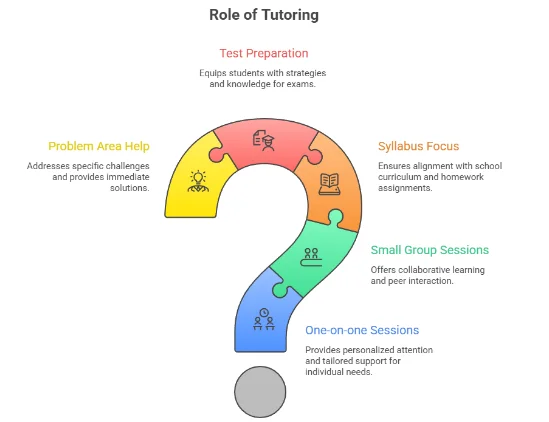
What it typically looks like:
- One-on-one or small group sessions
- Focus on the school syllabus and homework
- Preparation for tests and exams
- Immediate help with problem areas
In many ways, traditional tutoring is like a safety net. It helps children stay on track academically and boosts their performance in school.
But here’s the catch: it’s often reactive. Most parents turn to tutoring when their child is already facing difficulties.
UCMAS – A Brief Introduction
Now, UCMAS is a completely different approach.
Instead of focusing on school subjects directly, UCMAS is a brain development program that uses the abacus to train children’s minds.
Children start by learning calculations using a physical abacus. Over time, children move from using a physical abacus to visualizing it in their minds, which allows them to perform calculations quickly and accurately. This is why many parents notice a clear improvement in their child’s mental math skills.
What makes UCMAS especially effective is its multi-sensory approach. It engages children through visual, auditory, and hands-on learning, keeping them actively involved instead of passively learning.
More importantly, it strengthens core cognitive skills like concentration, memory, and thinking ability. So while it may look like a math program on the surface, it’s really helping children become faster, sharper, and more confident learners overall.
What makes UCMAS different:
- It focuses on how a child thinks, not just what they learn
- It builds core skills like memory, concentration, and visualization
- It trains both sides of the brain—logical and creative
Think of it this way: instead of helping your child finish their homework faster, UCMAS helps their brain work faster and smarter.
Comparison Between UCMAS and Traditional Tutoring
To really understand the difference, think of it this way: traditional tutoring is like hiring a coach to help your child pass a specific exam, while UCMAS is more like mental training that improves how your child performs in everything they do.
Here’s a clear side-by-side comparison of UCMAS mental math vs. traditional learning
Aspect | Traditional Tutoring | UCMAS |
Core Focus | School subjects and syllabus | Brain development and cognitive skills |
Purpose | Improve grades and academic performance | Enhance thinking ability and mental agility |
Approach | Explaining concepts, repetition, and practice | Training the brain through visualization and mental exercises |
Learning Style | Mostly academic and theory-based | Multi-sensory (visual, auditory, and hands-on) |
Timing | Usually starts when a child is struggling | Best started early for maximum brain development |
Nature of Learning | Reactive (addresses existing problems) | Proactive (builds skills before problems arise) |
Skill Development | Subject knowledge and exam techniques | Memory, concentration, speed, and problem-solving |
Dependency Level | A child may rely on a tutor for support | Encourages independent thinking and learning |
Speed & Accuracy | Improves with practice over time | Significantly enhanced through mental math training |
Long-Term Impact | Better school performance | Lifelong cognitive and learning skills |
Outcome | Higher grades and improved subject understanding | Faster thinking, better focus, and overall confidence |
Key Advantages of UCMAS
UCMAS focuses on strengthening core cognitive abilities, helping children improve not just in math, but in overall learning and thinking. The changes aren’t just academic; they show up in how children think, focus, and approach challenges every day.
1. Better Focus
In today’s world of constant distractions, getting a child to sit and concentrate can be a challenge. UCMAS helps improve attention span by training children to stay mentally engaged for longer periods.
Over time, parents notice that their child isn’t just focused during UCMAS sessions; they’re also more attentive while studying, completing homework, or even listening in class. This improved concentration often spills over into all areas of learning.
2. Stronger Memory
UCMAS relies heavily on visualization, especially when children begin solving problems by imagining the abacus in their minds. This process strengthens memory in a very natural way.
As a result, children start retaining information better; not just numbers, but also lessons, instructions, and concepts from other subjects. Many parents notice that their child needs fewer repetitions to remember things.
3. Faster Thinking
With consistent practice, children become quicker at processing information. They don’t just solve problems, they do it faster and with more clarity.
This ability to think quickly is especially helpful in situations that require problem-solving or decision-making, whether it’s in math class, exams, or everyday situations. It builds a kind of mental agility that gives children an edge.
4. Confidence Boost
There’s a noticeable shift in confidence when a child realizes they can solve complex problems mentally and do it faster than expected.
Children who once hesitated to answer questions often become more willing to participate, both in class and in other activities. This newfound UCMAS confidence isn’t limited to math; it reflects in their overall personality and willingness to try new things.
5. Reduced Fear of Math
For many children, math can feel intimidating. UCMAS changes that perception completely.
By turning calculations into a more engaging, almost game-like activity, children begin to see math as something enjoyable rather than stressful. This positive mindset can have a lasting impact on their academic journey.
6. Holistic Development
Perhaps the biggest advantage of UCMAS is that it goes beyond just one subject. While it may start with math, the skills it builds—focus, memory, speed, and logical thinking—benefit every area of learning.
Children become more independent learners, better problem-solvers, and more confident individuals. These are skills that stay with them long after the program ends, helping not just in school, but in life.
In essence, UCMAS isn’t just about making kids better at math; it’s about helping them become sharper, more capable thinkers in everything they do.
Why do top-performing students credit their success to abacus math programs like UCMAS?
Key Advantages of Traditional Tutoring
That said, traditional tutoring still plays a very important role.
1. Direct Academic Improvement
If your child is struggling with a specific subject, tutoring is the fastest way to address it.
2. Personalized Attention
Tutors can adapt their teaching style based on how your child learns best.
3. Exam Readiness
When exams are around the corner, tutoring helps with revision, practice, and confidence-building.
4. Filling Learning Gaps
Sometimes children miss foundational concepts. A tutor helps rebuild that base step by step.
5. Immediate Results
Unlike UCMAS, which shows gradual improvement, tutoring often leads to quicker improvements in grades.
Why Parents Prefer UCMAS for Cognitive Development
More and more parents today are looking beyond just report cards. Academic scores matter, but so do the underlying skills that help children learn, adapt, and succeed in the long run. That’s where UCMAS stands out; it focuses on building the foundation of how a child thinks, not just what they learn.
It Starts Early
Childhood is a critical period for brain development, and the earlier cognitive training begins, the more impactful it can be. UCMAS is designed to tap into these peak learning years, helping children develop essential mental skills when their brains are most receptive. This early start creates a strong base that supports learning throughout their academic journey.
It Builds Independence
Instead of relying on constant guidance, children trained through UCMAS gradually become independent learners. They develop the ability to approach problems on their own, think through solutions, and make decisions with confidence. This shift from depending on help to thinking independently is a key reason many parents prefer UCMAS.
It Prepares Them for the Future
Today’s world values skills like critical thinking, quick decision-making, and problem-solving far more than rote memorization. UCMAS nurtures these abilities through consistent mental training. As a result, children are better equipped to handle academic challenges, competitive environments, and future career demands.
It Complements School Learning
While UCMAS is not directly tied to school curricula, it naturally supports academic performance. Improved focus, memory, and thinking speed make it easier for children to understand and retain what they learn in school. This often leads to better overall performance even without additional tutoring.
What Children Gain from UCMAS Over Time
What really convinces parents is the visible changes they notice over time.
- Children become quicker at solving problems
- They show better concentration while studying
- Homework gets done more efficiently
- Memory improves noticeably
- Confidence levels rise
- They participate more actively in class
It’s not an overnight transformation, but the progress is steady and real.
What Parents have to say!
Satbir Gill, UCMAS Parent
“My son has developed a lot of mental math skills; he has started loving maths after joining UCMAS. He can quickly calculate numbers before we can even open calculators on our phones. It has also helped to boost his confidence; I would recommend everyone to give it a try!!”
Skylar Barboza, UCMAS Parent
“After joining UCMAS, his concentration and listening skills have improved significantly. He is more confident and enjoys solving math problems now. Thank you, UCMAS!”
Which is better—UCMAS or traditional tutoring?
The honest answer is: it depends on what your child needs right now.
If your child is struggling with schoolwork or needs help before exams, traditional tutoring is the right choice. It provides immediate academic support and helps improve grades.
But if you’re thinking long-term, about your child’s confidence, focus, memory, overall thinking ability, along with short-term goals like homework, then UCMAS is a powerful investment.
At the end of the day, it’s not just about helping your child do better in school. It’s about helping them think better, learn faster, and grow into confident individuals who are ready for whatever the future holds.
Stop searching ‘ tutoring classes near me Texas’ and start your child’s long-term success journey today. Book a free info session with UCMAS!
Frequently Asked Questions (FAQs)
It depends on the goal. UCMAS is better for long-term cognitive development, while traditional tutoring is ideal for immediate academic support and improving grades.
Abacus learning (UCMAS) focuses on brain development, memory, and mental math skills, whereas tutoring classes focus on school subjects and exam preparation.
Tutoring is effective for short-term academic improvement, but its long-term impact is limited compared to programs that build core cognitive skills.
UCMAS is specifically designed to enhance brain development through structured mental exercises, making it more effective in this area.
Many parents are increasingly choosing a mix of UCMAS for cognitive development and tutoring for academic support when needed.
Yes, mental math improves focus, memory, and problem-solving skills, which positively impact overall academic performance.
UCMAS is highly effective for this age group as it targets peak brain development years, while tutoring can be added for subject-specific help if required.
Look for certified programs like UCMAS that offer structured levels, trained instructors, and a proven curriculum. It’s also helpful to check class reviews, trial sessions, and how the program focuses on overall cognitive development, not just calculations.