

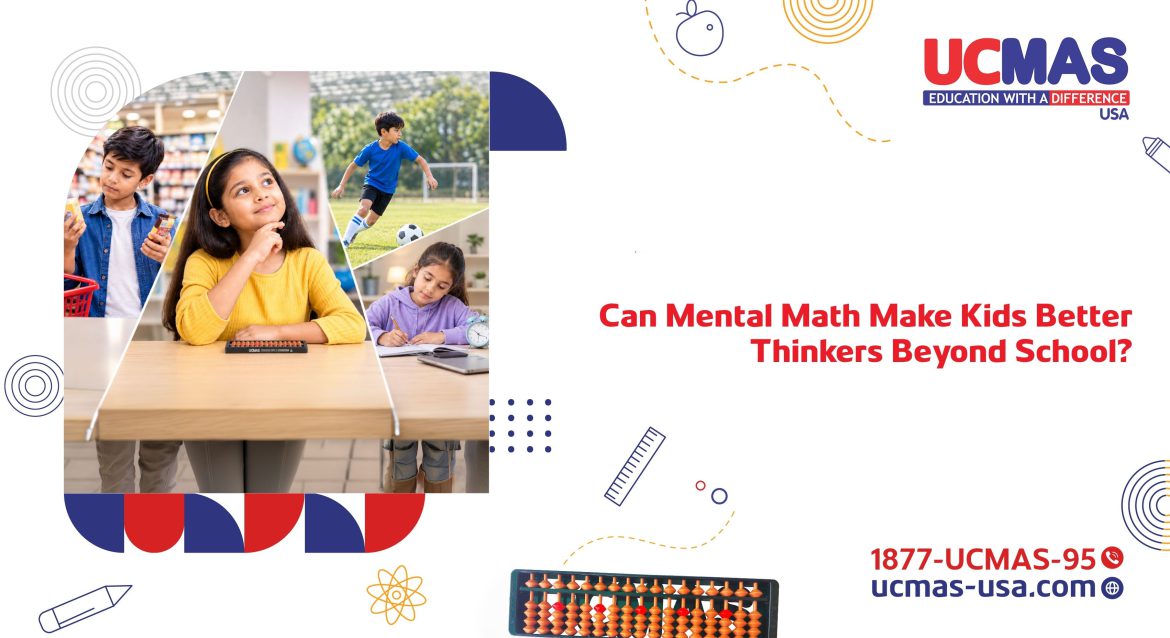
A child is at a store trying to figure out whether they have enough allowance for two things. On the soccer field, they have seconds to decide where to pass the ball. At home, they need to estimate how long homework will take before heading to practice.
None of these situations looks like a math test. Yet each one asks a child to focus, process information and make a decision.
That is why learning should prepare children for more than grades. At UCMAS, abacus-based learning is designed to develop mental abilities that can support children both academically and in everyday situations. Through abacus mental math, children practice concentration, visualization and mental calculation while becoming increasingly comfortable working through challenges independently.
The Skills Kids Need Don't Stay Inside the Classroom
Traditional learning often separates academic skills from everyday life. Children learn math during math class, reading during language class and problem-solving through assigned exercises.
Real life is rarely that organized.
A child might need to listen carefully to instructions while remembering several steps. They may have to compare two choices quickly or change their approach when the first one does not work. These situations involve concentration skills, critical thinking, logical reasoning and decision-making all at once.
This is where mental math practice can become especially valuable. As explored in how UCMAS mental math prepares kids for life, children can use number fluency in practical situations such as handling money, estimating costs, managing time and keeping track of scores during games.
The bigger advantage is not simply knowing the answer faster. It is becoming more comfortable thinking independently.
Concentration Is a Skill Children Can Practice
Children live in a world full of distractions. Notifications, screens, conversations and competing activities constantly demand their attention. Being able to stay focused on one task can therefore become an important advantage.
Abacus practice requires children to pay attention to numbers, follow processes and eventually visualize bead movements mentally. This sustained engagement gives them repeated opportunities to exercise their attention span and working memory.
Stronger concentration skills can matter well beyond calculations.
A child needs concentration when listening to a coach explain a new drill, following several instructions from a parent, reading a complicated question or completing a project without constantly losing track of what comes next.
In that sense, concentration is not simply an academic skill. It is part of learning how to function confidently and independently.
Quick Thinking Isn't About Rushing
There is an important difference between thinking quickly and rushing.
Rushing often means acting before fully understanding a situation. Quick thinking means processing the available information efficiently and responding with greater clarity.
Mental math skills for kids give children opportunities to practice this process repeatedly. They see information, hold it mentally, work through it and produce a response. With continued practice, familiar processes may become faster and more fluent.
This type of quick thinking for children can become useful when circumstances change unexpectedly.
Consider a board game. A child plans one move, but another player changes the situation. Now the child has to reassess the board and choose another strategy. Similar mental abilities appear in chess, puzzles and other strategy-based activities. UCMAS explores this connection in its article on how abacus learning can support strategic thinking.
This cognitive flexibility can help children become more comfortable adapting rather than freezing when their original plan no longer works.
From Solving Sums to Solving Problems
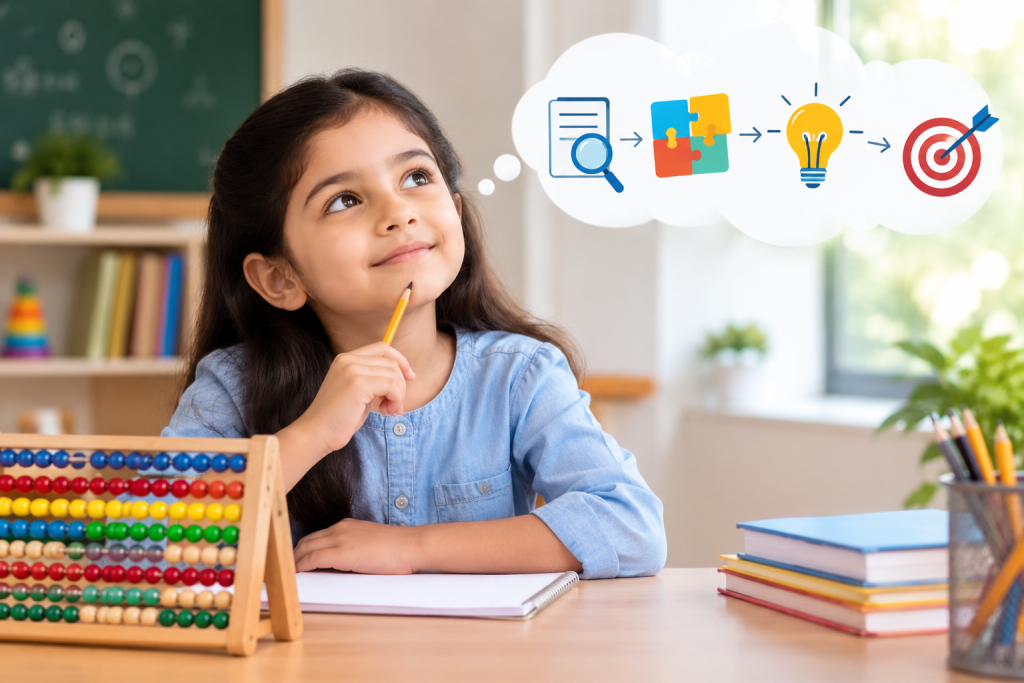
Knowing formulas is useful. Knowing what to do when there is no obvious formula can be even more valuable.
Problem-solving skills for kids develop when children have opportunities to analyze information, identify patterns, consider possibilities and work toward an answer.
Abacus learning gradually shifts from physically manipulating beads to visualizing calculations mentally. Instead of depending entirely on external prompts, children learn to process information in their minds.
This connects closely with independent thinking.
This article on why abacus teaches children how to think explains why developing reasoning can matter when children encounter unfamiliar questions rather than simply memorizing steps for familiar ones.
Real-world problem solving works much the same way. Children cannot memorize an answer for every situation they will encounter. What they can develop is a stronger process for approaching unfamiliar challenges.
Mental Math Shows Up in More Places Than Kids Realize
Ask children where they use math, and many will probably say, “school.”
But everyday math is almost everywhere.
Imagine a child who has $20 and wants to buy two items. They can estimate the total before reaching the checkout. While baking, they may need to understand measurements or quantities. During a game, they might calculate points or work out how many more they need to win.
Mental calculation can also help with estimating time, comparing prices and understanding quantities.
The goal is not to turn every daily activity into a math lesson. It is to help numbers feel familiar enough that children can use them naturally when situations require them.
The Confidence to Trust Their Own Thinking
One of the most meaningful changes can happen when a child stops immediately looking to an adult for confirmation.
“Is this right?”
“What should I do next?”
“Can you check it for me?”
As children repeatedly work through challenges and see themselves improve, they can become more willing to trust their own abilities.
This connection is discussed in this guide on how abacus math can help build confidence in kids, highlighting how repeated progress and successful calculations can create a sense of accomplishment.
Parents can reinforce that progress at home too. These proven ways to improve academic confidence in children offer additional strategies for encouraging children to approach learning more positively.
The goal is not for children to always have the correct answer immediately. It is for them to become willing to think, try, adjust and try again.
The Real Edge Is Learning How to Think
Good grades matter, but childhood development should not end with a report card.
Children will eventually face situations that have no worksheet, formula or teacher standing beside them. They will need to focus despite distractions, evaluate information, make choices and solve unfamiliar problems.
That is where the broader value of abacus and mental math training becomes clearer.
By helping children practice concentration, mental processing, problem-solving and independent thinking, UCMAS aims to build abilities children can carry from the classroom into everyday life.
Register for a UCMAS information session and discover how your child can begin developing skills designed to go far beyond mathematics.
FAQs
Mental math can help children estimate costs, calculate change, manage time and work with quantities without immediately depending on a calculator.
Regular mental math practice can help children become more fluent at processing numerical information and completing familiar calculations efficiently.
Abacus practice requires children to follow numbers, movements and eventually mental visualizations closely, giving them structured practice in sustained attention.
Mental math encourages children to process information, recognize patterns and determine ways to reach an answer, all of which can support problem-solving.
As children become more comfortable solving problems independently, repeated success can help them feel more confident about trusting their thinking and choices.
Quick thinking can help children respond to changing situations in sports, games, conversations and everyday tasks where they need to process information and make timely choices.
Children can practice concentration, visualization, numerical fluency, memory, logical reasoning and problem-solving alongside their calculation abilities.
Parents can explore UCMAS to learn about abacus and mental math programs and available learning options.