

Parents in 2026 are rethinking how children spend their hours after school. The focus is no longer just on keeping kids busy; it is about choosing programs that improve cognitive development, academic performance, creativity, confidence, and future readiness.
As a result, the competition among the best afterschool programs has become more intense than ever. Coding academies, sports coaching centers, robotics labs, dance studios, and music schools are all competing for attention. Yet one educational trend is quietly outperforming them all: abacus classes.
Once considered a traditional learning method, abacus education has evolved into one of the most effective modern brain-development programs for children. Parents and educators alike are now recognizing that while coding teaches technical skills and sports build physical discipline, abacus training develops the brain itself.
From improved concentration to faster problem-solving and stronger memory retention, the benefits of abacus learning are helping children gain a long-term academic advantage. That is why many families are now turning to mental math classes, online abacus classes for kids, and specialized Abacus Math School programs as their top afterschool choice.
The Shift in Afterschool Education in 2026
The afterschool industry has changed dramatically over the past few years. Parents are no longer satisfied with activities that simply entertain children. Instead, they are looking for programs that provide measurable educational benefits.
Modern parents want afterschool activities that help children:
- Improve focus and concentration
- Strengthen problem-solving skills
- Develop confidence
- Build academic readiness
- Reduce unhealthy screen dependency
- Prepare for future learning challenges
This is why educational enrichment programs are rapidly growing worldwide. However, among all the options available today, abacus learning stands out because it strengthens foundational cognitive skills rather than teaching just one subject.
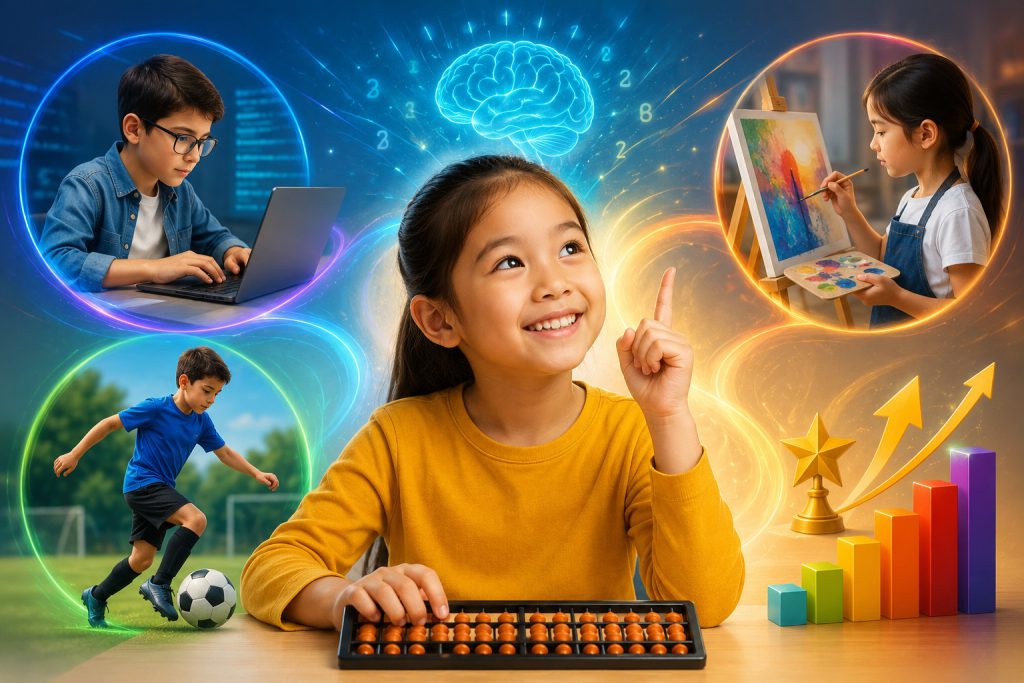
Unlike sports, coding, or arts-based programs, abacus education improves how children think and learn overall.
Why Coding Programs Are Losing Their Exclusive Edge
Coding has dominated educational trends for years. Many parents believe programming is essential for future careers, leading to the rise of countless coding camps and robotics workshops.
And while coding certainly has benefits, it also has limitations, especially for younger children.
Coding Relies Heavily on Screens
Most coding classes require children to spend additional hours on computers and tablets after already using screens throughout the school day.
In contrast, abacus classes online and physical abacus programs offer highly interactive learning without excessive digital dependence. Even virtual abacus sessions focus on visualization and mental calculations rather than passive screen consumption.
This is becoming increasingly attractive to parents concerned about screen fatigue and shortened attention spans.
Coding Builds Technical Skills — Abacus Builds Cognitive Skills
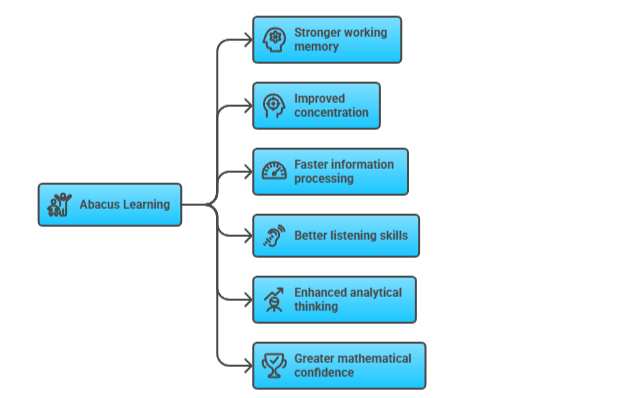
Coding teaches logic and computational thinking. Abacus training develops broader mental capabilities such as:
- Concentration
- Visualization
- Memory retention
- Listening skills
- Numerical confidence
- Mental speed
These are transferable skills that improve performance across every subject, including mathematics, science, reading comprehension, and even creative activities.
This is why many parents now prioritize mental math classes before introducing advanced technical subjects.
Cognitive Development Happens Earlier
Children can learn coding later in life. But brain development during early childhood has a critical window.
Programs like abacus lessons online are designed specifically to maximize learning during those developmental years when children absorb information most effectively.
By strengthening neural pathways early, abacus education creates a stronger foundation for future academic success.
Why Sports Programs Are Not Enough
Sports programs remain one of the most popular afterschool activities for children. They improve physical fitness, teamwork, and discipline while helping children stay active.
However, sports training often does little to improve academic performance directly.
Parents today increasingly want balanced development, physical growth, and cognitive improvement. Abacus learning provides something unique: measurable mental development.
Children participating in abacus for schools programs often demonstrate improved classroom performance, faster calculations, and better concentration over time.
Unlike sports, where progress may depend heavily on physical ability, abacus success is accessible to almost every child willing to practice consistently.
Why Art Programs Have Limitations
Creative arts are incredibly valuable for emotional expression and imagination. Music, painting, dance, and drama help children explore creativity and individuality.
But many parents in 2026 are seeking activities that provide both creativity and academic enhancement.
That is where abacus learning becomes especially powerful.
Abacus education engages imagination through visualization while simultaneously strengthening memory and analytical thinking. Children mentally picture bead movements while solving calculations, activating multiple areas of the brain at once.
This combination of creativity and logic is one reason why Abacus Math School programs are becoming increasingly popular worldwide.
The Science Behind Abacus Training
The effectiveness of abacus education is supported by cognitive science and educational research.
When children first learn abacus techniques, they physically move beads to calculate numbers. Over time, they transition into mental visualization, imagining the abacus in their minds while solving problems rapidly.
This process stimulates both the left and right hemispheres of the brain simultaneously.
Many parents report that children become more attentive in school and more confident during exams after joining abacus classes.
Why Online Abacus Learning Is Booming
One of the biggest educational shifts of 2026 is the rise of flexible online learning models.
Parents increasingly prefer educational programs that combine convenience with quality instruction. This has led to enormous growth in:
- online abacus classes for kids
- abacus classes online
- abacus lessons online
- Personalized sessions with an abacus online tutor
Online abacus education allows children to learn from home while still receiving interactive guidance from experienced instructors.
Unlike passive online learning models, virtual abacus classes remain highly engaging because students actively participate in mental calculations, visualization exercises, and rapid problem-solving activities.
For busy families, this flexibility is a major advantage.
Why Schools Are Adopting Abacus Programs
Another major trend in 2026 is the expansion of abacus for schools initiatives.
Educational institutions are increasingly recognizing the value of cognitive training programs that strengthen concentration and learning abilities at an early age.
Schools introducing abacus education often report benefits such as:
- Better mathematical performance
- Improved classroom participation
- Increased student confidence
- Enhanced memory retention
- Stronger focus among younger learners
Because abacus training supports overall academic development, many schools now see it as an educational investment rather than simply an extracurricular activity.
Why Abacus Beats Other Afterschool Programs
Parents are becoming far more intentional about choosing educational activities for their children. The goal is to help them build lifelong skills that improve academic performance, confidence, and overall cognitive development.
This is exactly why abacus learning continues to stand out amongst the best afterschool programs available today.
Unlike activities that focus on a single subject or hobby, abacus training strengthens the brain’s core learning abilities. It teaches children how to think faster, focus longer, process information more efficiently, and solve problems with confidence.
That is what makes abacus classes far more than just math lessons.
Abacus Improves Brain Development During Critical Years
A child’s brain develops most rapidly between the ages of 4 and 14. During this stage, children absorb information faster and form stronger neural connections through repetitive mental stimulation.
Abacus training takes advantage of this developmental window by engaging both sides of the brain simultaneously.
When children use an abacus, they combine:
- Logical thinking
- Visualization
- Hand-eye coordination
- Memory recall
- Auditory processing
- Concentration
Over time, students transition from physically moving beads to mentally visualizing the abacus in their minds. This process strengthens imagination and mental calculation abilities in a way that traditional tutoring often cannot.
That is why many parents see dramatic improvements after enrolling children in mental math classes or an Abacus Math School.
Abacus Is Better Than Traditional Math Learning
Many children struggle with mathematics because schools often focus heavily on memorization and repetitive worksheets. This can make math feel stressful, confusing, or boring. Abacus learning changes the experience entirely.
Instead of memorizing formulas passively, children actively engage with numbers visually and physically. This makes calculations feel more interactive and enjoyable.
As a result, children often:
- Develop stronger number sense
- Solve problems faster
- Reduce fear of mathematics
- Improve concentration
- Build confidence in classrooms
One of the biggest advantages of abacus lessons online and physical abacus programs is that they turn learning into a challenge children enjoy rather than fear.
Abacus Strengthens Concentration and Attention Span
One of the biggest concerns among parents today is reduced attention span. Children are surrounded by constant digital stimulation, short videos, gaming apps, notifications, and endless screen distractions. As a result, many children struggle with:
- Sitting still
- Paying attention in class
- Completing homework independently
- Staying focused on one task for long periods
Abacus training directly addresses this issue.
The repetitive visualization and rapid mental calculations require children to stay mentally engaged throughout the session. Over time, this strengthens sustained attention and focus.
Unlike passive screen-based entertainment, online abacus classes for kids require active participation and concentration. Parents frequently notice improvements in:
- Listening skills
- Homework completion
- Classroom participation
- Patience during learning activities
In many cases, children who once struggled to focus begin developing stronger academic discipline naturally.
Abacus Builds Long-Term Academic Success
The biggest advantage of abacus education is that it improves overall learning efficiency.
Coding programs teach programming.
Sports improve physical fitness.
Art develops creativity.
But the abacus strengthens the mental abilities needed to succeed in every subject.
Children who complete abacus classes often demonstrate:
- Faster information processing
- Better memory retention
- Increased problem-solving ability
- Improved logical thinking
- Greater confidence during exams
These skills benefit not only mathematics but also science, reading comprehension, and analytical subjects.
That is why many schools are now introducing abacus for schools initiatives as part of their academic enrichment strategies.
Academic Advantages Without Pressure
Traditional tutoring can sometimes feel stressful and overwhelming for children. Long homework sessions, exam pressure, and repetitive drilling often create frustration instead of motivation.
Abacus programs feel different. Most Abacus Math School programs are interactive, gamified, and achievement-based. Children enjoy:
- Solving mental challenges
- Increasing calculation speed
- Tracking progress levels
- Participating in competitions
This creates a positive learning environment where children improve academically without feeling excessive pressure. Instead of fearing math, children begin enjoying it.
Screen-Free Education Is Becoming Premium
In a world dominated by devices, screen-free learning is becoming increasingly valuable. Parents are actively searching for educational programs that:
- Reduce unnecessary screen exposure
- Encourage active thinking
- Improve focus naturally
- Keep children mentally engaged offline
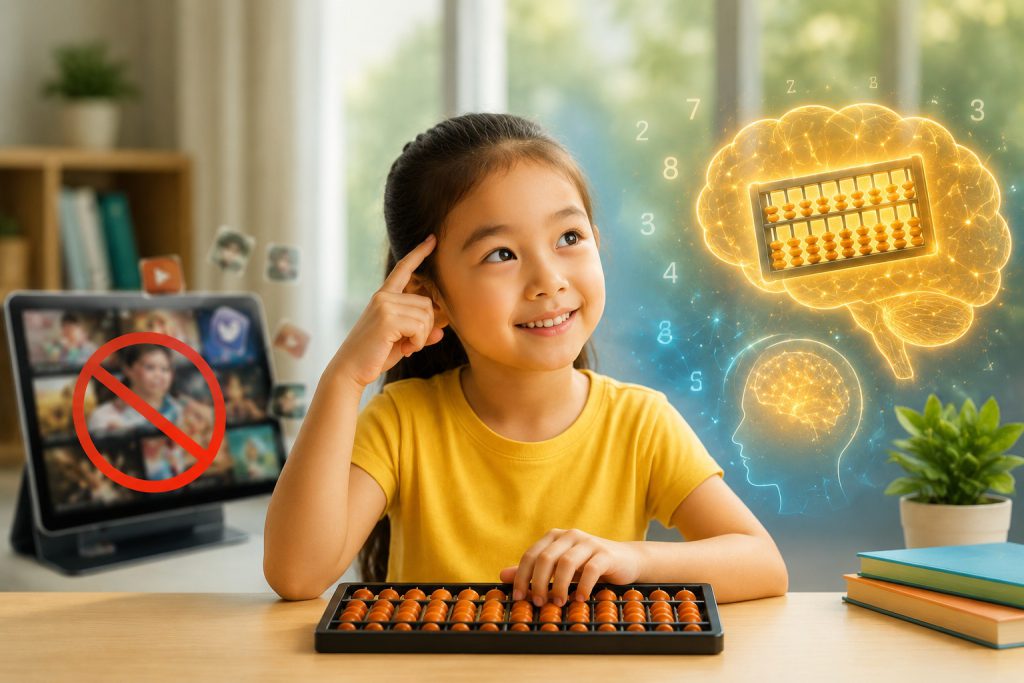
Abacus learning offers exactly that balance. Even when delivered through an abacus online tutor, the focus remains on mental visualization and active calculation rather than passive screen consumption.
This makes abacus lessons online far more interactive and cognitively engaging than many other virtual learning programs.
UCMAS: Building Smarter Minds Beyond the Classroom
As parents continue to search for the best after-school programs in 2026, the focus is clearly shifting toward activities that provide long-term academic and cognitive benefits. While coding, sports, and art each play an important role in a child’s development, abacus education offers something uniquely foundational: stronger concentration, faster thinking, improved memory, and greater confidence.
That is why more families are turning toward abacus classes, mental math classes, and online abacus classes for kids as a smarter investment in their child’s future.
Programs like UCMAS have helped redefine modern abacus learning by combining structured mental development with engaging and child-friendly teaching methods. Through interactive learning, visualization techniques, and progressive mental math training, children gain skills that extend far beyond mathematics and positively impact their overall academic journey.
Whether through classroom sessions, online abacus classes, or personalized support from an online abacus tutor, abacus education is becoming one of the most valuable tools for raising focused, confident, and future-ready learners.
Ready to Give Your Child a Smarter Start? Join UCMAS today!
FAQs
Purposeful programs use afternoon hours as a launchpad for skill development. Instead of unstructured screen time, these environments offer deliberate, hands-on learning that keeps children engaged and curious.
Whole-brain programs—like chess, music, or abacus—strengthen fundamental neural pathways, building:
- Laser-Sharp Focus: Cultivating deep attention spans away from digital distractions.
- Working Memory: Expanding the brain’s capacity to retain and process complex data.
Spatial Visualization: Training the mind to map out abstract concepts mentally.
With school curricula heavily relying on screens, purposeful afterschool care provides a crucial tactile reset. Physical tools and face-to-face peer collaboration give children the sensory engagement they need to decompress.
Mastering a complex new skill outside of a graded classroom environment skyrockets a child’s confidence. They stop fearing failure and begin to view challenges as puzzles waiting to be solved.
The Bottom Line
Intentional afterschool programs transform empty hours into a competitive edge. They don’t just keep kids safe—they build the focus, resilience, and critical thinking required for long-term success.