

Parents today have more educational choices than ever before. A quick search for mental maths classes near me can return dozens of options, each claiming to improve math skills, concentration, and academic performance.
But how do you know which program is genuinely beneficial for your child?
The truth is that not all mental math programs are created equal. Some focus only on arithmetic, while others help children develop concentration, memory, visualization, confidence, and problem-solving abilities.
At UCMAS USA, children learn much more than math. Through structured abacus-based training, they develop cognitive skills that support success across academics and everyday life.
What Does "Thinking Faster" Actually Mean?
When parents hear the phrase “thinking faster,” they often imagine children solving math problems instantly.
In reality, faster thinking involves several brain functions working together:
- Processing information quickly
- Maintaining concentration
- Recalling information efficiently
- Making decisions confidently
- Solving problems accurately
- Switching between tasks effectively
Children who think faster aren’t necessarily rushing. They are simply processing information more efficiently.
This efficiency can influence academic performance, confidence, and everyday decision-making.
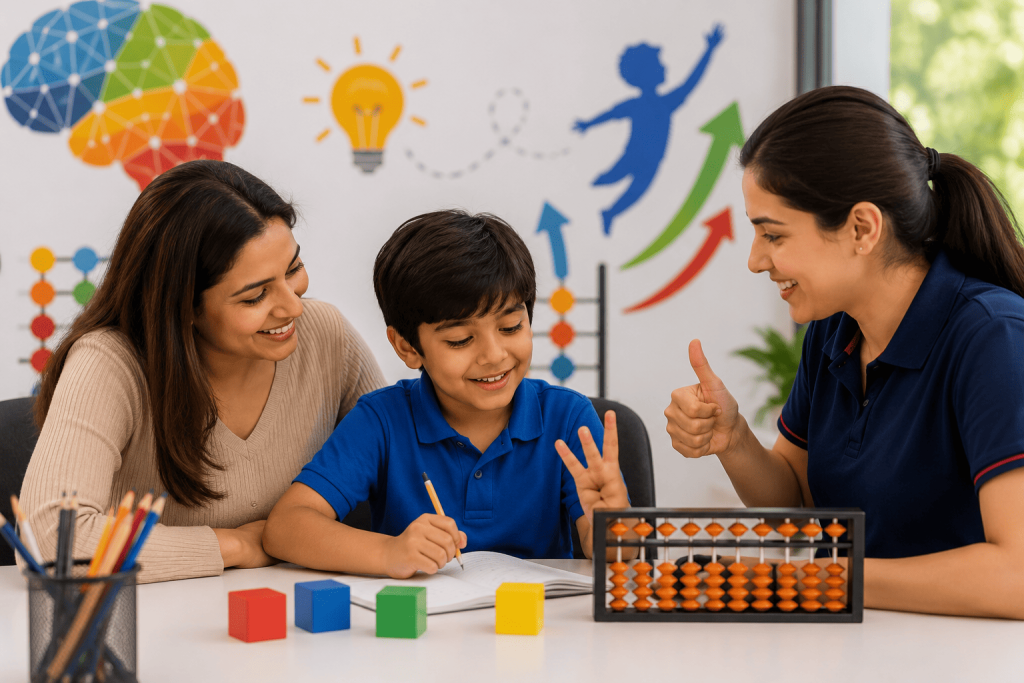
Why Parents Are Looking Beyond Traditional Math Tutoring
Many parents initially consider tutoring when their child struggles with math.
However, traditional tutoring often focuses on helping students complete homework, prepare for tests, or improve grades in a specific subject.
Mental math programs take a different approach.
Instead of teaching children what to think, they focus on training how the brain thinks.
This is one reason why mental math classes have become increasingly popular among parents seeking long-term educational benefits rather than short-term academic fixes.
What Is Mental Math Training?
Mental math training teaches children to perform calculations without relying heavily on calculators, fingers, or written methods.
Many programs use the abacus as a visual learning tool. Over time, children learn to visualize the abacus mentally and solve calculations at remarkable speed.
This process strengthens:
- Memory
- Concentration
- Visualization
- Listening skills
- Analytical thinking
- Confidence
Programs such as UCMAS use a structured curriculum that gradually develops these abilities through progressive levels.
Why Abacus-Based Learning Works
The abacus is far more than a counting device.
When children learn abacus techniques, they engage multiple parts of the brain simultaneously. They listen, visualize, calculate, and respond—all at the same time.
This multi-sensory learning process helps improve:
- Brain development
- Focus and attention span
- Mental processing speed
- Problem-solving abilities
- Academic confidence
Parents looking for abacus classes near me are often surprised to discover that the benefits extend well beyond mathematics.
Read about Abacus Mental Math program to better understand how abacus learning works.
Key Factors to Consider Before Choosing a Program
1. Structured Curriculum
A quality mental math program should follow a clear progression rather than random exercises.
Look for:
- Defined learning levels
- Regular assessments
- Age-appropriate activities
- Long-term skill development
Programs that offer a systematic curriculum typically produce more consistent results.
2. Qualified Instructors
The instructor can significantly influence your child’s experience.
Ask questions such as:
- How are instructors trained?
- How much experience do they have?
- How is student progress monitored?
A knowledgeable teacher can make learning enjoyable while ensuring children stay motivated.
For additional guidance, explore these important questions for abacus class that parents should ask before enrolling their children.
3. Student Engagement
Children learn best when they enjoy the process.
Observe whether classes include:
- Interactive activities
- Positive reinforcement
- Age-appropriate challenges
- Opportunities for participation
A highly engaging environment encourages long-term commitment and better outcomes.
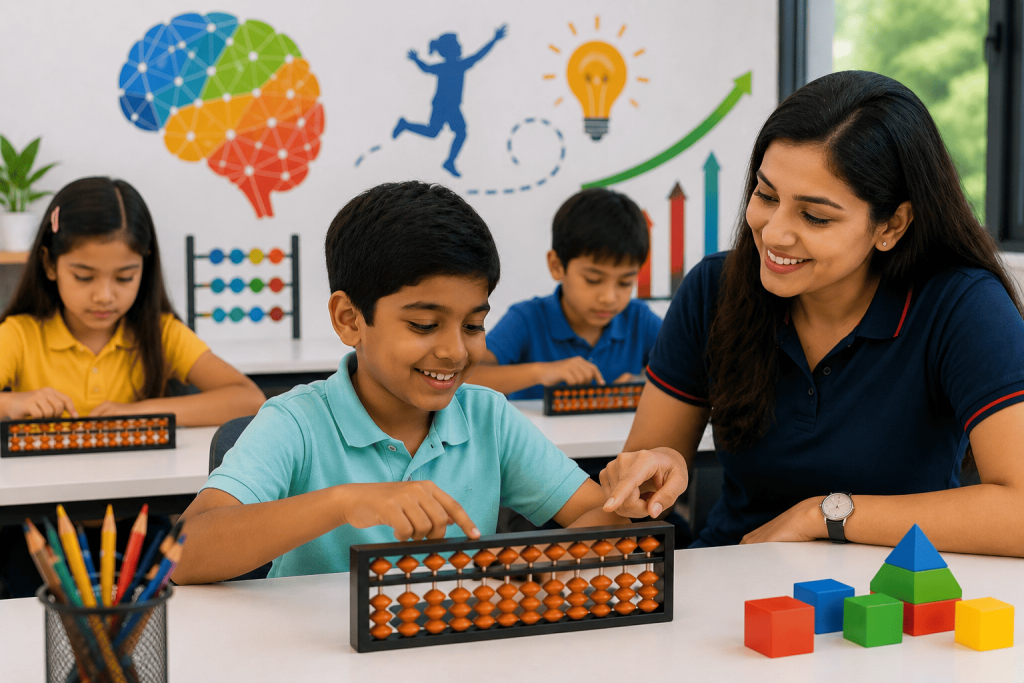
4. Track Record and Reputation
When researching abacus training near me, take time to review:
- Parent testimonials
- Student success stories
- Years of operation
- Program credibility
Established programs with a proven methodology often provide more reliable results.
Online vs Offline Learning: Which Is Better?
One of the most common questions parents ask is whether to choose in-person or online classes.
Benefits of Offline Classes
Traditional classroom learning offers:
- Face-to-face interaction
- Immediate teacher support
- Social engagement
- Structured learning environments
Many families searching for abacus for kids near me prefer local centers because children benefit from direct classroom participation.
Benefits of Online Classes
Technology has made online learning highly effective.
Today’s online abacus classes near me searches often lead parents to virtual programs that offer:
- Flexible scheduling
- Convenience
- Reduced travel time
- Access to expert instructors
High-quality abacus online classes can deliver results comparable to classroom learning when supported by structured lessons and active parental involvement.
For many busy families, online learning provides an excellent balance between convenience and educational quality.
What Makes a Great Abacus Program?
Not every program offering an abacus course delivers the same value.
Look for programs that emphasize:
Brain Development
The goal should extend beyond faster calculations.
Strong programs focus on developing:
- Memory
- Concentration
- Visualization
- Creativity
- Confidence
Consistent Assessments
Regular evaluations help parents understand their child’s progress and identify areas for improvement.
Long-Term Growth
The best programs help children develop habits and cognitive abilities that continue benefiting them throughout their academic journey.
The Role of Technology in Modern Abacus Education
Many parents today seek an abacus online tutor who can provide personalized guidance remotely.
Technology has made it easier than ever for children to receive high-quality instruction regardless of location.
Leading programs now combine:
- Live online instruction
- Digital practice tools
- Progress tracking
- Interactive learning methods
This approach has helped create some of the best online abacus classes available today.
How UCMAS Differs from Traditional Tutoring
Traditional tutoring often focuses on immediate academic challenges.
UCMAS focuses on developing the underlying cognitive skills that support learning across all subjects.
Children don’t simply memorize formulas or solve worksheets.
Instead, they learn to:
- Think faster
- Focus longer
- Process information efficiently
- Approach challenges confidently
This is one reason many parents compare UCMAS favorably against conventional tutoring programs.
Learn more about it in this guide that compares UCMAS to traditional tutoring.
Signs You've Found the Right Program
A quality mental math program typically demonstrates:
- Clear learning objectives
- Experienced instructors
- Strong student engagement
- Consistent progress tracking
- Positive parent feedback
- Long-term cognitive development focus
Most importantly, your child should look forward to attending classes.
When children enjoy learning, progress tends to follow naturally.
Building Skills That Last Beyond School
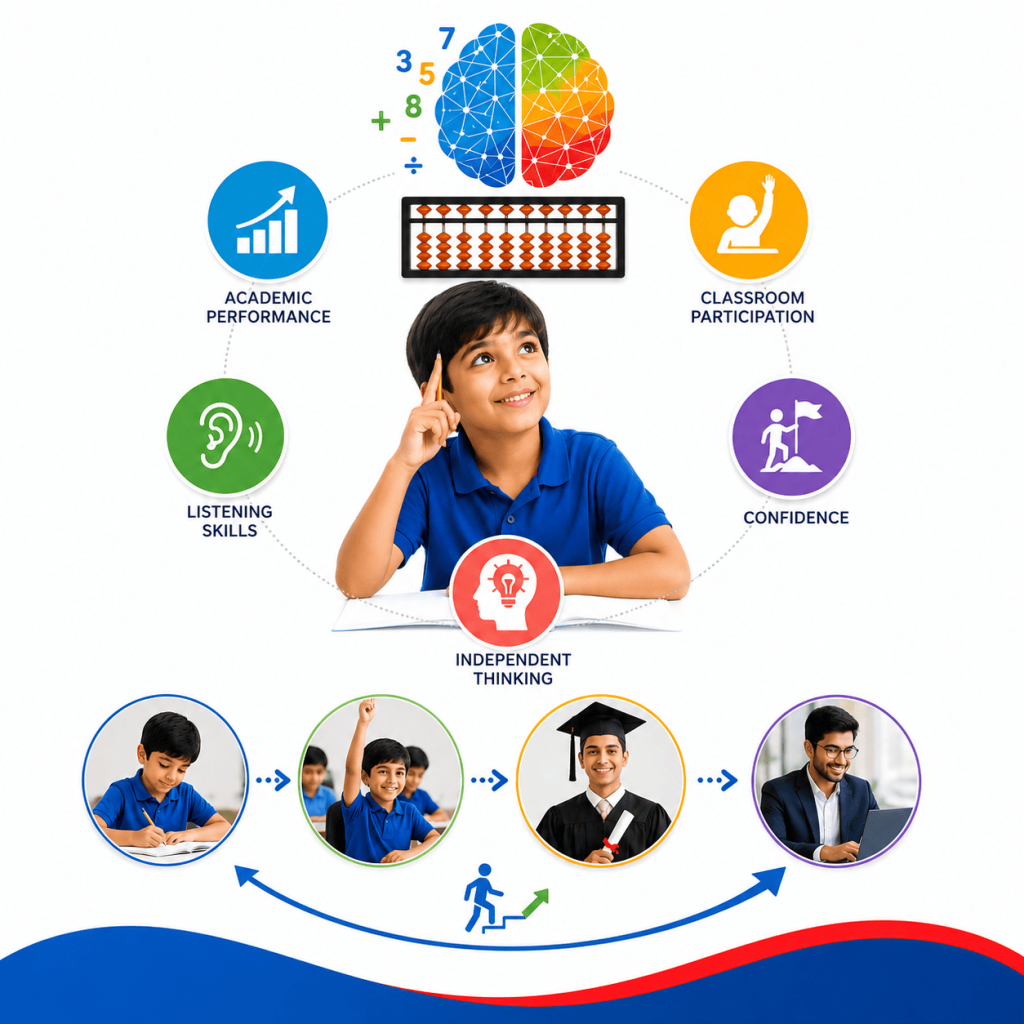
The benefits of mental math training often extend far beyond mathematics.
Parents frequently report improvements in:
- Academic performance
- Classroom participation
- Listening skills
- Confidence
- Independent thinking
These are lifelong skills that can support children throughout school, college, and future careers.
Why Thousands of Parents Trust UCMAS
Choosing the right mental math program is about more than improving grades. It is about helping children develop the mental abilities needed to thrive in an increasingly competitive world.
Through proven abacus-based learning, UCMAS helps children strengthen concentration, memory, visualization, and confidence while making learning enjoyable and engaging.
Whether you’re exploring local centers or online learning options, UCMAS provides a structured pathway to stronger cognitive development and academic success.
Enroll your child in a UCMAS program today and discover how mental math training can build skills that last a lifetime.
FAQs
Look for programs with a structured curriculum, qualified instructors, proven results, and positive parent reviews. Visiting a center or attending a trial class can also help you evaluate the learning environment.
Parents should assess instructor quality, student engagement, curriculum structure, and progress tracking systems. A good center focuses on cognitive development, not just faster calculations.
Both formats can be effective when delivered properly. Online classes offer flexibility and convenience, while offline classes provide direct interaction and classroom engagement.
Most children begin mental math training between ages 4 and 13. Early exposure often helps maximize benefits related to concentration, visualization, and cognitive development.
Most programs recommend one or two sessions per week combined with regular practice at home. Consistency is more important than lengthy study sessions.
Children often demonstrate improvements in concentration, memory, confidence, mental calculation speed, and overall learning efficiency. Results vary based on participation and practice consistency.
Costs vary depending on location, program structure, and class format. Most reputable programs offer flexible enrollment options and provide detailed pricing during consultations.
UCMAS has helped millions of children worldwide develop stronger cognitive abilities through structured abacus-based training. Its proven methodology focuses on whole-brain development, making it a trusted choice for families seeking long-term educational benefits.