

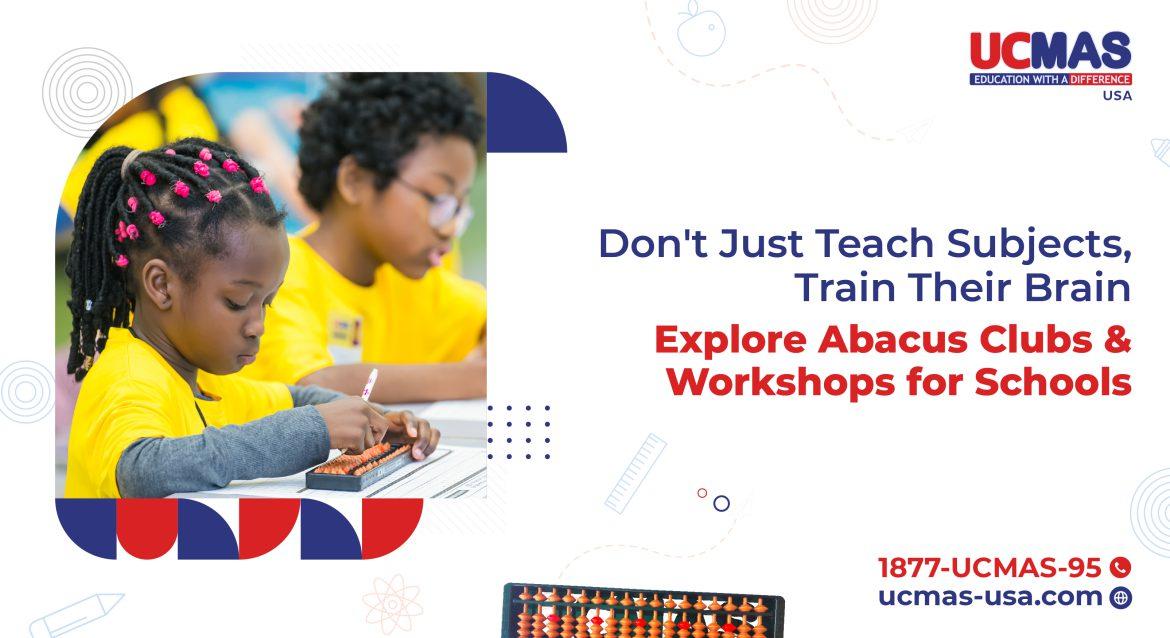
In today’s digital classrooms, calculators and apps often do the heavy lifting. But educators are beginning to realize something powerful: when technology handles the math, children lose the chance to build the mental muscles that make learning stick. That’s why the abacus in schools is making a comeback — not as a relic of the past, but as a tool for the future.
More schools are turning to abacus-based mental math programs to nurture focus, memory, and problem-solving skills from an early age. The result? Students who don’t just memorize numbers but understand them.
What Is an Abacus Program in Schools?
At first glance, an abacus might look like a simple counting frame. But beneath those moving beads lies a deeply scientific method of learning. When children use the abacus, they’re activating both sides of the brain — the logical left hemisphere for calculations and the creative right for visualization.
Over time, students begin performing calculations mentally, visualizing the beads in their minds. This process enhances visual-spatial reasoning, concentration, and photographic memory — skills that extend far beyond math. In fact, research shows that children in an abacus mental math program often outperform their peers in overall cognitive tasks.
How Schools Integrate Abacus Training into Their Curriculum
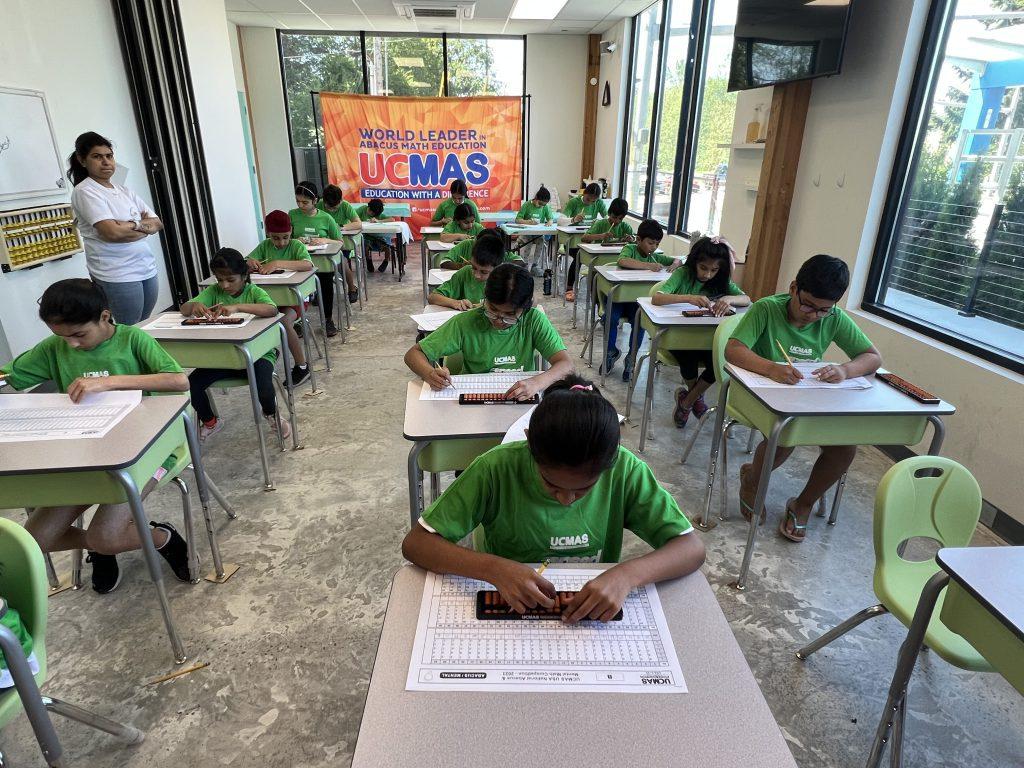
Many educators are now finding ways to introduce abacus for schools as part of children’s everyday learning. Some integrate it into regular math periods, while others offer it as an enrichment or after-school program.
In UCMAS-partnered institutions, for example, certified trainers work alongside classroom teachers to ensure that abacus learning complements the school’s academic goals. The approach is flexible, scalable, and tailored to each age group — making it one of the most adaptable abacus school models in the world.
Read this insightful article on how UCMAS Mental Math Abacus is used in Schools and how this partnership works.
Why Educators Are Adopting Abacus and Mental Math Programs
The reason abacus training is rapidly spreading across schools is simple — it works. From improved test scores to happier, more confident students, the benefits are showing up in every classroom where mental math programs take root.
1. Boosting Focus, Memory, and Concentration
Children today are surrounded by distractions — social media, screens, and constant notifications. The abacus provides a refreshing alternative: it demands attention, discipline, and visualization.
Studies show that students trained in abacus mental math demonstrate better working memory and attentional control. They learn to concentrate longer, process faster, and think more clearly — not just in math, but in other subjects too.
Additionally, Early Abacus Classes offer children early exposure to mental math, providing a head start in developing focus and confidence.
2. Building Confidence and Reducing Math Anxiety
For many children, math anxiety begins early. The fear of getting an answer wrong can overshadow the joy of problem-solving. Abacus training flips that narrative.
When students master mental math through visualization, they begin to see math as a game, not a test. They develop self-belief — a mindset that carries into every subject.
Teachers often report that abacus-trained students participate more, volunteer answers, and approach math with excitement. You can read more about this transformation in How Abacus Math Helps Build Confidence in Kids.
3. Strengthening Core Cognitive Skills for All Subjects
An abacus isn’t just about arithmetic. It sharpens the foundational skills children use across disciplines — logic, sequencing, and critical thinking. When a child visualizes bead movements, they’re essentially training their brain to organize information more efficiently.
That’s why teachers notice that abacus in schools leads to improvement in reading comprehension, science reasoning, and even creativity. The same brain pathways used to visualize numbers are used for imagining ideas, stories, and concepts.

4. Aligning with Modern Education Goals (STEM & NEP 2020)
Modern education is shifting toward conceptual understanding and experiential learning. Programs like the abacus for schools fit right into this framework.
By encouraging hands-on learning, abacus classes support STEM development — helping students think logically, recognize patterns, and solve problems independently.
In fact, the philosophy aligns with the National Education Policy (NEP 2020), which emphasizes foundational numeracy, cognitive growth, and skill-based learning.
Research-Backed Benefits of the Abacus in Schools
Abacus training is more than a fun activity — it’s backed by science. Researchers around the world have studied its impact on brain development, and the findings are remarkably consistent: abacus learning rewires how children think and process information.
Functional MRI studies reveal that children trained on the abacus use different neural pathways than those who are not trained.
Abacus training focuses on dual-hemisphere activation that not only improves math accuracy but also the speed of mental operations. According to findings highlighted in How Math Skills Boost Academic Performance, strong math foundations enhance reasoning, logic, and decision-making — the building blocks of lifelong learning.
How Schools Can Get Started with Abacus Learning
Thinking of bringing abacus learning to your school? The process is simpler than you might imagine. With the right partner and structure, any institution can integrate abacus education smoothly into its curriculum.
1. Choose the Right Abacus Program or Partner
Not all abacus programs are created equal. Schools should seek a certified curriculum backed by research, a global presence, and proven outcomes.
Partnering with experienced organizations like UCMAS ensures that your teachers and students benefit from decades of expertise, structured materials, and globally recognized methods.
2. Training Teachers and Creating a Supportive Environment
The success of an abacus school depends largely on its facilitators. When teachers receive proper training and support, they can seamlessly integrate abacus concepts into math lessons.
Workshops, co-teaching models, and periodic evaluations ensure that the learning experience remains engaging and effective for every child.
3. Measuring Progress and Outcomes
Schools can track students’ growth through pre- and post-assessment tests, observing measurable improvements in calculation speed, focus, and retention.
These results often go beyond grades and extend to other subjects as well, because once children learn to think more effectively, they tend to learn everything more efficiently.

The Future of Mental Math in Education
As education evolves, so must the tools we use. The future classroom won’t just teach math — it will train the brain.
The growing adoption of the abacus in schools marks a shift in education — from memorization to mastery, from fear to confidence. By empowering children to calculate mentally and think visually, we’re giving them the much-needed life skills.
If you’re an educator or parent ready to unlock your child’s true potential, explore how UCMAS is transforming classrooms with whole-brain learning.
Discover the UCMAS Abacus Math Program and see how your school can be part of the movement that’s redefining how kids learn, think, and succeed.
FAQs
It boosts focus, memory, and logical thinking — improving overall classroom performance, not just math scores.
The ideal age to start is between 4 to 13 years, when the brain is most receptive to visual and numerical learning.
Not at all. Abacus programs are complementary, not a replacement. They enhance a child’s understanding of numbers and improve calculation speed and accuracy.
Abacus programs can be implemented in several flexible ways — during math periods, as co-curricular activities, or through after-school sessions.
Progress is tracked through regular assessments that measure speed, accuracy, memory, and concentration. Schools can see measurable improvement within a few months, often reflected not just in math tests but also in attention span and classroom performance.
Yes. The beauty of abacus learning lies in its individualized approach. Visual and tactile learners, as well as students with mild learning challenges, often thrive with abacus training.
Schools can reach out to UCMAS on their In-School Program page. The UCMAS team will help with the complete onboarding, training, scheduling, and implementation of the abacus program.