

Walk into any kindergarten or elementary classroom in the U.S., and you’ll see curious little minds buzzing with questions, giggles, and bursts of energy. But you might also notice some kids who hesitate to raise their hands, struggle to complete simple math problems, or avoid reading aloud. These are often not signs of laziness but indicators of learning gaps—small cracks in understanding that, if left unaddressed, can widen as children move through school.
As parents, catching these early can make a world of difference. Let’s explore what learning gaps are, what causes them, how to spot the signs, and how programs like UCMAS are helping children not just “catch up” but thrive.
What Are Learning Gaps in Early Education?
Every child learns differently, but there’s a baseline of skills—like number sense, phonics, memory, and focus—that form the foundation of all future learning. When a child misses or struggles with these basics, a learning gap develops.

A Simple Definition
A learning gap is the difference between what a child has actually learned and what they’re expected to know at their age or grade level. For example, if a second grader can’t grasp place value, they may find it harder to understand multiplication later on.
According to Harvard’s Center on the Developing Child, more than 1 million new neural connections form every second in a child’s early years. This means the first few years of school are the most crucial for shaping attention, memory, and problem-solving skills. If gaps are ignored during this stage, kids may carry them forward into middle school and beyond.
What Causes Learning Gaps in Children?
Learning gaps aren’t always about a child’s effort—they often stem from external factors. Knowing the root causes can help parents and teachers address them better.
1. Lack of Strong Foundational Skills
If early education skips hands-on math or literacy basics, children may end up memorizing rather than truly understanding. This is why programs that focus on foundations—like brain development programs—play such an important role.
2. Uneven Learning Pace in Classrooms
In a busy classroom, teachers can’t always match every child’s pace. While some kids race ahead, others may quietly fall behind, creating subtle but long-term gaps.
3. Over Reliance on Rote Learning
Rote memorization might help pass a test, but it doesn’t encourage deeper understanding. Without conceptual clarity, kids struggle when topics build on each other—especially in math.
4. Limited Exposure to Engaging Learning Methods
Kids learn best when they’re engaged. Overuse of traditional worksheets or even early dependence on AI in education apps may overlook the tactile, real-world learning kids need to strengthen focus and creativity.
5. External Factors
Home environment, confidence issues, and even lack of sleep can all impact how a child learns and retains information.
Common Signs of Learning Gaps in Early School Years
Spotting learning gaps isn’t always easy—they don’t show up overnight. But here are some red flags to watch for.
1. Difficulty Grasping Basic Math or Reading Concepts
If your child constantly struggles with counting, phonics, or simple addition, it may be a sign that foundational skills need strengthening. Abacus math programs are one way children can build this foundation while making math feel fun and less intimidating.

2. Struggles with Focus and Retention
Does your child forget instructions moments after hearing them? Weak working memory is often tied to early learning gaps.
3. Lack of Confidence in Classroom Participation
Children who feel “behind” often hesitate to answer questions or avoid group activities altogether. Over time, this affects self-esteem.
4. Avoidance of Homework or Learning Tasks
If your child dreads homework daily, it could be more than boredom. It may be avoidance rooted in frustration.
5. Gaps in Critical Thinking and Problem-Solving Skills
Learning isn’t just about memorizing—it’s about applying knowledge. Kids with gaps may find it hard to make connections or solve problems independently.
6. Teachers or Parents Noticing Inconsistent Progress
Report cards, teacher comments, or sudden dips in performance can all signal a widening learning gap.
Bridging the Gap – Effective Solutions for Parents and Educators
The good news? Learning gaps aren’t permanent. With early action, they can be closed, and children can catch up with—and even surpass—their peers.
1. Creating a Supportive Home Learning Environment
Simple changes like reading together, practicing mental math games, or encouraging curiosity during daily routines can go a long way. For activity ideas, check out these fun ways to strengthen learning foundations.
2. Introducing Play-Based and Hands-On Learning
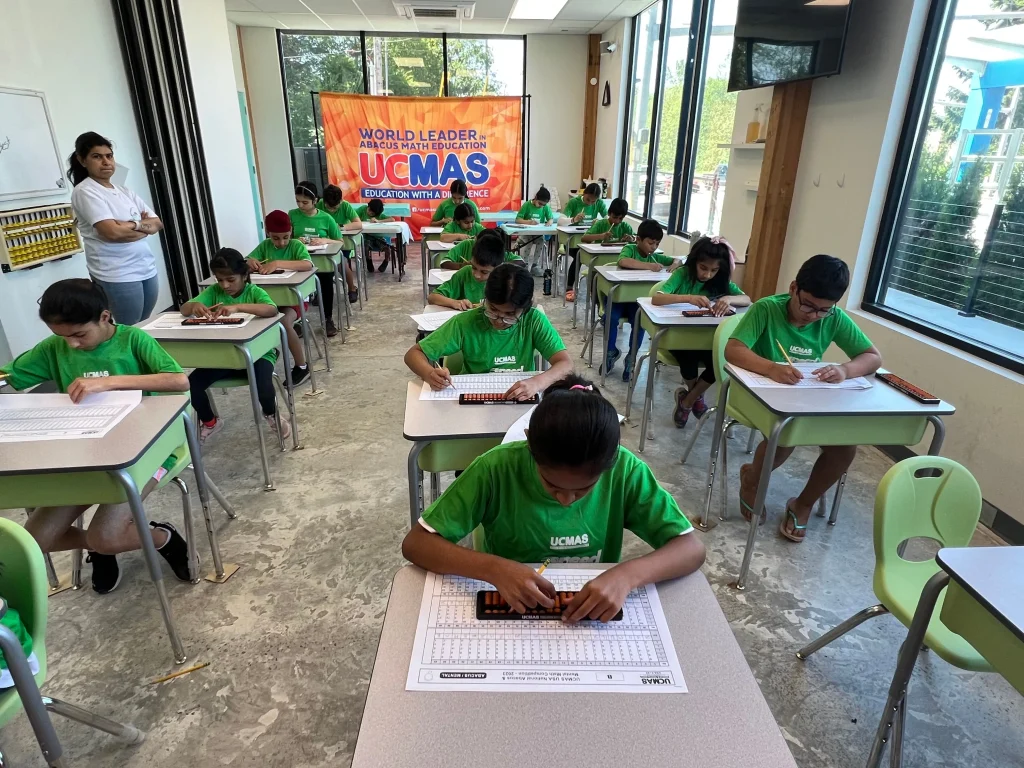
Kids retain more when they learn through play—whether it’s math games, puzzles, or abacus beads.
3. Encouraging Consistency Over Perfection
Small, regular practice often beats long, stressful study sessions. Even 15 minutes a day can build stronger focus and memory.
4. Using Brain-Training and Skill-Building Programs
Programs designed to enhance concentration, memory, and creativity—like abacus intelligence training—give kids lifelong skills, not just test prep.
5. Collaboration Between Teachers and Parents
When parents and teachers stay in sync, it’s easier to track progress and provide extra support where needed.
How UCMAS Turns Learning Gaps into Learning Gains
Here’s where it gets exciting: not only can learning gaps be bridged, but they can also be transformed into strengths. This is exactly what UCMAS has been doing for children worldwide.
1. Focus on Whole-Brain Development
Unlike traditional math tutoring, UCMAS goes beyond grades and drills. Its brain development program stimulates both the left and right brain through mental visualization, tactile practice, and speed training.
2. Building Confidence Through Abacus-Based Learning
Research shows that kids engaged in abacus math demonstrate better concentration and memory. In fact, a study published in Frontiers in Psychology found that abacus learners outperformed peers in working memory and problem-solving tasks. Learn more about how abacus math boosts confidence.
3. Personalized Growth – Every Child Learns at Their Own Pace
With UCMAS, kids don’t just memorize formulas—they master mental math techniques at a pace that suits them, closing gaps without pressure.

4. Beyond Math – UCMAS as a Life-Skills Program
UCMAS is not limited to math. It builds focus, discipline, visualization, and creativity—skills kids can carry into every subject.
Why Spotting Learning Gaps Early Can Change Everything
Here’s the truth: the earlier you recognize and address learning gaps, the easier it is for your child to bounce back. By elementary years, interventions like abacus math programs or brain development activities can help kids rebuild confidence and close those gaps before they affect higher-level learning.
Every child has untapped potential—it’s simply a matter of providing them with the right tools and environment to shine. And when schools, parents, and programs like UCMAS work together, learning gaps don’t just shrink; they turn into opportunities for growth.
So, don’t wait until report cards or test scores reveal the gaps. Be proactive. Locate a UCMAS center near you and help your child gain focus, confidence, and a love for learning.
If you still have queries, you can book a free info session here to see how your child can thrive with UCMAS.