

In homes across the United States, parents are asking a different question than they did a decade ago.
Instead of asking, “How can my child get better grades?” many are asking, “How can my child learn faster, focus better, and think more effectively?”
This shift explains why thousands of families are enrolling their children in specialized cognitive skills training programs for kids. These programs are designed not simply to improve academic performance but to strengthen the underlying mental abilities that drive learning itself.
Organizations like UCMAS have helped parents understand that building stronger cognitive abilities early can create long-term advantages in school and beyond.
As education becomes more competitive and future careers demand stronger problem-solving abilities, parents are increasingly looking for programs that develop memory, concentration, creativity, and critical thinking rather than focusing solely on subject-specific tutoring.
The Growing Demand for Cognitive Development
Today’s children are growing up in a world filled with information, distractions, and rapidly changing technology.
While schools do an excellent job teaching academic content, many parents feel that students also need support in developing foundational thinking abilities. This is one reason why enrollment in cognitive development programs in the USA continues to rise.
Parents are realizing that success in mathematics, science, reading, and even communication often depends on core mental skills such as:
- Concentration
- Memory retention
- Processing speed
- Visualization
- Logical reasoning
- Problem-solving
- Confidence
When these abilities improve, children often perform better across multiple subjects rather than just one.
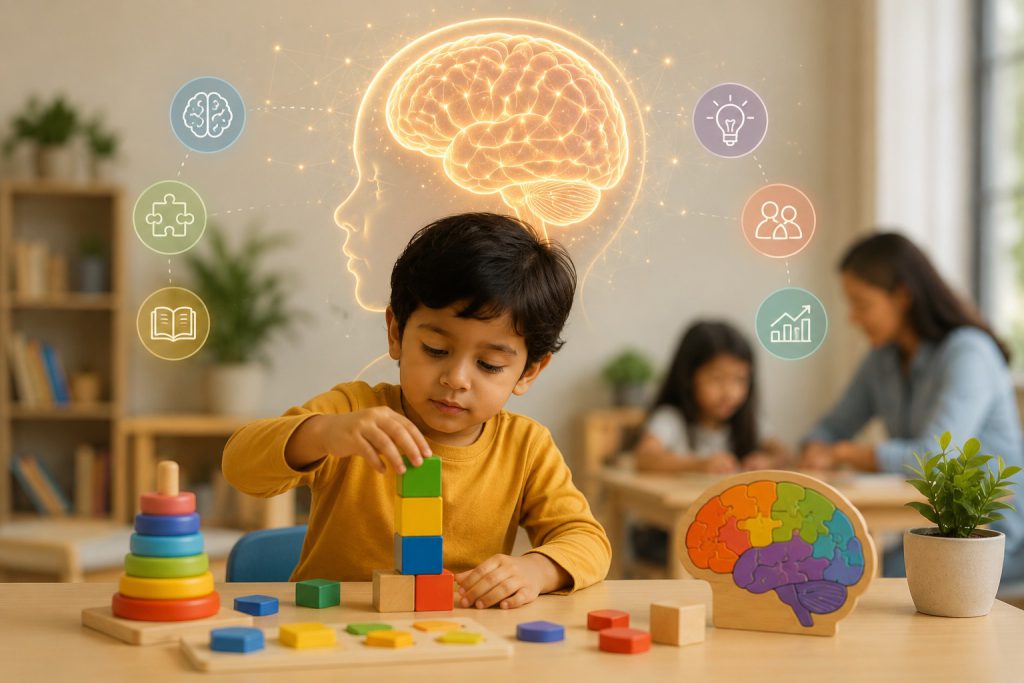
Why Parents Are Looking Beyond Traditional Tutoring
For years, tutoring has been the default solution for academic challenges.
However, tutoring often focuses on helping children understand a specific subject or prepare for an upcoming test. While valuable, it may not address the root causes of learning difficulties.
This is where brain skills training children programs differ.
Rather than reteaching school content, these programs focus on improving how children think and learn. Parents are increasingly recognizing that strengthening the brain’s learning processes can produce benefits that extend across all academic areas.
Many families who previously relied on tutors are now exploring programs that combine cognitive development with academic enhancement.
The Science Behind Cognitive Training
Research in neuroscience suggests that the brain develops through repeated mental exercise and stimulation.
Just as physical exercise strengthens muscles, targeted cognitive activities can help improve mental performance. Well-designed programs encourage children to practice memory, visualization, concentration, and analytical thinking on a regular basis.
This growing understanding has contributed significantly to why parents choose cognitive training over traditional educational interventions.
The goal is not merely better grades today but stronger learning capabilities for years to come.
Why Abacus-Based Programs Are Leading the Movement
Among the many cognitive training approaches available, abacus-based learning has emerged as one of the most popular.
Programs built around abacus training engage multiple regions of the brain simultaneously. Children learn to visualize beads mentally while solving increasingly complex calculations.
This process strengthens:
- Memory
- Focus
- Visualization
- Concentration
- Speed of thinking
- Mental flexibility
The result is far more than faster math computation.
Children often develop stronger attention spans, greater confidence, and improved academic performance.
Parents interested in understanding the methodology behind these programs can explore the UCMAS Abacus Math Program.
The Skills Modern Parents Value Most
The definition of success has evolved.
Parents today recognize that future careers will require adaptability, creativity, and analytical thinking. As a result, they are investing in mental skill building kids programs that develop transferable abilities rather than narrow academic skills.
Some of the most desired cognitive skills include:
1. Concentration
Children face constant distractions from screens, social media, and digital entertainment.
Cognitive training activities encourage sustained attention and help children maintain focus for longer periods.
2. Memory
Strong memory supports learning in every subject.
Many cognitive exercises strengthen both short-term and long-term memory retention.
3. Problem-Solving
Employers consistently rank problem-solving among the most important workplace skills.
Developing these abilities early can provide lasting advantages.
4. Confidence
When children experience success in challenging mental activities, their self-belief often improves significantly.
Why Parents Trust Skill-Based Learning Centers
Another major factor driving growth is trust.
Parents increasingly seek structured programs with proven methodologies and measurable outcomes.
Many families look for specialized centers that focus exclusively on cognitive development rather than offering general tutoring services.
The article on Why Parents Trust Skill-Based Learning Centers explores the reasons behind this trend.
Signs Your Child May Benefit From Cognitive Training
Every child can benefit from stronger thinking skills, but some children may particularly benefit from additional support.
Common indicators include:
- Difficulty maintaining focus
- Easily distracted during homework
- Low confidence in academics
- Slow problem-solving speed
- Challenges retaining information
- Anxiety around mathematics
Parents can learn more through the article that talks about the Signs Your Child Needs Brain Skill Training.

The Link Between Cognitive Development and Academic Achievement
Strong cognitive abilities often lead to better educational outcomes.
When children improve concentration, memory, and information processing, learning becomes easier and more efficient.
This is one reason many parents view cognitive training as one of the best afterschool programs available today.
Unlike short-term academic interventions, cognitive development can continue benefiting students throughout elementary school, high school, and even adulthood.
The article on Brain development activities improving cognitive performance explores this connection further.
How UCMAS Helps Build Cognitive Skills
UCMAS has spent decades helping children strengthen core cognitive abilities through a structured learning system that combines abacus learning with brain development techniques.
Students participate in progressive training designed to enhance:
- Visualization
- Concentration
- Listening skills
- Memory
- Accuracy
- Speed
- Confidence
Through consistent practice, children transition from physical calculations to advanced mental visualization techniques.
This approach transforms traditional mathematics into a powerful cognitive development experience.
Parents looking to understand how skill-based learning reduces educational challenges can also read Why Abacus Is Important in Reducing the Math Achievement Gap.
Looking Beyond Academics
One of the most interesting aspects of cognitive training is that the benefits often extend far beyond school.
Parents frequently report improvements in:
- Listening skills
- Time management
- Task completion
- Self-discipline
- Confidence during presentations
- Independent learning habits
These life skills can influence long-term success just as much as academic performance.
For many families, cognitive training is no longer viewed as an educational expense. Instead, it is considered an investment in future potential.
Building Stronger Minds for Tomorrow
The educational landscape is changing.
Parents are increasingly recognizing that future success depends not only on what children know but also on how effectively they can think, learn, and adapt.
This realization has fueled the rapid growth of cognitive skills training programs across the United States.
Programs centered around abacus classes, cognitive development, and brain training continue to gain momentum because they focus on strengthening the foundations of learning itself.
At UCMAS USA, children develop critical thinking abilities, stronger concentration, enhanced memory, and greater confidence through a proven cognitive development framework.
Ready to discover a UCMAS center near you?
Explore the UCMAS Center Finder page to look for a center near you.
Interested in learning more about UCMAS opportunities nationwide? Visit the New Center Page to explore our learning centers across the United States.
FAQs
Parents are recognizing that strong cognitive abilities such as memory, focus, and problem-solving support success across all academic subjects. Many families view cognitive training as a long-term investment in their child’s future learning potential.
These programs use structured exercises and learning techniques to strengthen mental abilities such as concentration, visualization, memory, and reasoning. The goal is to improve how children learn rather than simply teaching academic content.
Many children begin cognitive development programs between ages 4 and 13. Starting early often allows children to develop stronger learning habits during critical stages of brain development.
Tutoring focuses on improving performance in specific subjects, while cognitive training focuses on strengthening the mental processes behind learning. This broader approach can benefit multiple academic areas simultaneously.
Parents often report improvements in concentration, memory retention, calculation speed, confidence, and classroom participation. Many children also become more independent learners.
Many cognitive training methods are supported by research showing that targeted mental exercises can strengthen neural pathways associated with attention, memory, and problem-solving abilities.
Abacus-based learning combines visualization, memory, and concentration training while developing calculation skills. It serves as an effective tool for strengthening multiple cognitive functions simultaneously.
Look for programs with structured curricula, experienced instructors, measurable outcomes, and a proven track record. Parent reviews and student success stories can also provide valuable insights.
Abacus training helps improve visualization, concentration, memory, attention span, analytical thinking, and mental processing speed. These abilities often support overall academic success.
UCMAS combines abacus-based learning with a comprehensive cognitive development framework. Its structured curriculum focuses on building memory, concentration, confidence, and problem-solving skills through progressive training.
Yes. Many organizations now offer online cognitive development programs, allowing children to participate from home while still receiving structured instruction and guidance from trained educators.