

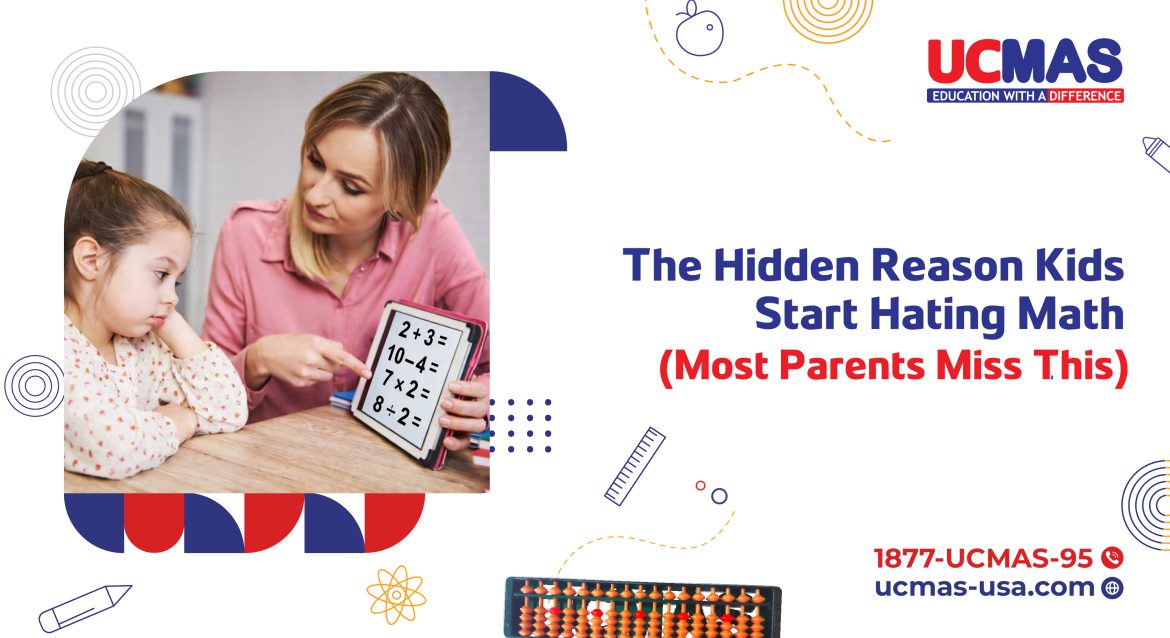
Your child isn’t “bad at math.”
But somewhere along the way… they started believing they are.
Maybe it’s the hesitation before answering.
Maybe it’s the “I can’t do this” after just one attempt.
Or maybe it’s the quiet avoidance—homework left undone, questions left unasked.
Here’s the truth most parents in San Antonio don’t realize: Math struggles are rarely about ability—they’re about confidence.
And once that confidence drops, performance follows.
In this guide, you’ll discover why children lose confidence in math, how you can rebuild it at home, what actually works (and what doesn’t) and how structured programs like UCMAS can make a real difference
If you’ve been searching for math help for kids near me or confidence-building classes for kids near me, this guide will give you the clarity you need.

Why Math Confidence Matters More Than Marks
Math isn’t just about getting the right answer.
It’s about believing you can get there.
The Link Between Confidence and Performance
Children who feel confident:
- Attempt more problems without hesitation
- Recover faster from mistakes
- Show better retention and understanding
On the other hand, even capable children freeze when confidence drops.
Confidence Builds Life Skills Beyond Math
Strong self-confidence in kids doesn’t stop at academics. It influences:
- Decision-making
- Logical thinking
- Everyday problem-solving
A confident child doesn’t just solve equations—they approach challenges differently.
Why Kids in San Antonio Lose Math Confidence
Even bright children can struggle. And often, it’s not because they lack ability. Confidence in math is shaped by experiences, environment, and how children are taught. When the learning process feels stressful or confusing, even capable students begin to doubt themselves.
Fear of Making Mistakes
Classroom pressure can make children afraid of being wrong—so they stop trying.
Memorization Over Understanding
When kids memorize instead of understanding, they struggle with new or complex problems.
Short Attention Spans (Thanks to Screens)
Constant digital stimulation reduces focus and mental stamina—both critical for math.
Lack of Individual Attention
In crowded classrooms, some children fall behind quietly—and their confidence takes the hit.
Signs Your Child Is Losing Confidence in Math
Confidence issues don’t show up overnight—they build gradually. It often starts with small behavioral changes that are easy to miss but become more visible over time.
Avoiding Math Homework
Procrastination often masks fear, not laziness.
Frequent Negative Self-Talk
“I’m bad at math” is a confidence issue—not a capability issue.
Taking Too Long on Simple Problems
Hesitation replaces clarity when confidence drops.
Anxiety Before Tests or Classes
Stress around math is a major red flag parents should not ignore.
How San Antonio Parents Can Build Math Confidence at Home
You don’t need to be a math expert to help your child. In fact, what matters more than your math knowledge is your approach—how you respond to their struggles, how you encourage effort, and how you create a positive learning environment at home.

Normalize Mistakes
Teach your child that mistakes are part of learning—not something to fear.
Use Real-Life Math
Turn everyday activities into learning moments:
- Counting change at a store
- Measuring ingredients while cooking
- Managing time and schedules
Create a Pressure-Free Environment
Avoid criticism. Instead:
- Praise effort
- Celebrate small wins
Build Daily Habits
Consistency beats intensity.
10–15 minutes of daily practice can outperform long, irregular study sessions.
If you’re looking for structured guidance, these academic confidence tips can make a significant difference in how your child approaches learning.
When Home Efforts Aren’t Enough
Sometimes, despite your best efforts, your child still struggles. That’s where structured programs step in.
Why Traditional Tutoring Falls Short
Most tutoring focuses on:
- Completing homework
- Improving grades
But it rarely addresses the root issue—confidence.
How Abacus Training Builds Math Confidence
Abacus learning isn’t just about numbers—it’s about how the brain processes them. Read this guide on how abacus math helps build confidence in kids.
- Visual Learning Improves Understanding: Children visualize numbers, making math less abstract and more intuitive.
- Faster Calculations Build Confidence: Speed creates a sense of mastery—and mastery builds confidence.
- Improved Focus and Memory: Abacus training strengthens concentration, mental endurance and cognitive skills
For parents searching for abacus classes near me in San Antonio, this approach offers both academic and mental development benefits.
If your child resists math completely, pushing harder won’t help.
If you don’t know what to do when your child says, “I hate Math”—it’s to rebuild their interest and confidence step by step.
Why Structured Programs Work Better for Confidence
Consistency along with expert guidance brings transformation. While home support lays the foundation, structured programs provide the consistency, methodology, and expert supervision that many children need to truly rebuild confidence.
Step-by-Step Skill Development
Children progress at their own pace—no pressure, no comparison.
Personalized Attention
Small group settings ensure every child gets the support they need.
Confidence Through Achievement
As children improve, they see their progress—and start believing in themselves.
Why San Antonio Parents Choose Structured Math Programs
Parents today aren’t just looking for marks—they’re looking for growth.
Programs that focus on:
- Cognitive development
- Confidence building
- Long-term learning skills
…deliver far better outcomes than traditional methods.
If you’ve been searching for math help for kids near me…it’s time to choose a program that builds both skills and mindset. Also, here is a guide to help parents build academic Confidence in kids.
The Long-Term Impact of Math Confidence
When children become confident in math, the results go far beyond grades.
- Better Academic Performance: Confidence leads to participation, and participation leads to improvement.
- Stronger Problem-Solving Skills: Children learn to think—not just memorize.
- Higher Self-Esteem: Success in math often spills into other areas of life.
- Future-Ready Skills: Confidence today builds capability for tomorrow—especially in STEM fields.
Why UCMAS Could Be the Turning Point Your Child Needs
Confidence doesn’t come from more pressure—it comes from the right method. When children start understanding math, they stop fearing it… and that’s where real growth begins.
Programs like UCMAS focus not just on solving problems, but on building the mindset to tackle them with confidence.
If you want your child to stop saying “I can’t” and start saying “I can,” now is the time to act.
Enroll now or book a free info session at UCMAS to see the transformation firsthand.
Frequently Asked Questions (FAQs)
Encourage daily practice, normalize mistakes, and use real-life math examples to make learning engaging and stress-free.
Yes, there are specialized programs like abacus-based learning that focus on both math skills and confidence building.
Common reasons include fear of mistakes, lack of understanding, classroom pressure, and insufficient personalized attention.
Simple activities like counting games, real-life problem solving, and short daily practice sessions help build confidence effectively.
Yes, abacus training improves visualization, speed, and accuracy, which naturally boosts confidence and reduces math anxiety.
With consistent practice and the right guidance, noticeable improvements can be seen within a few weeks to months.
Avoid forcing them and instead focus on rebuilding interest through engaging methods, supportive environments, and structured programs.