

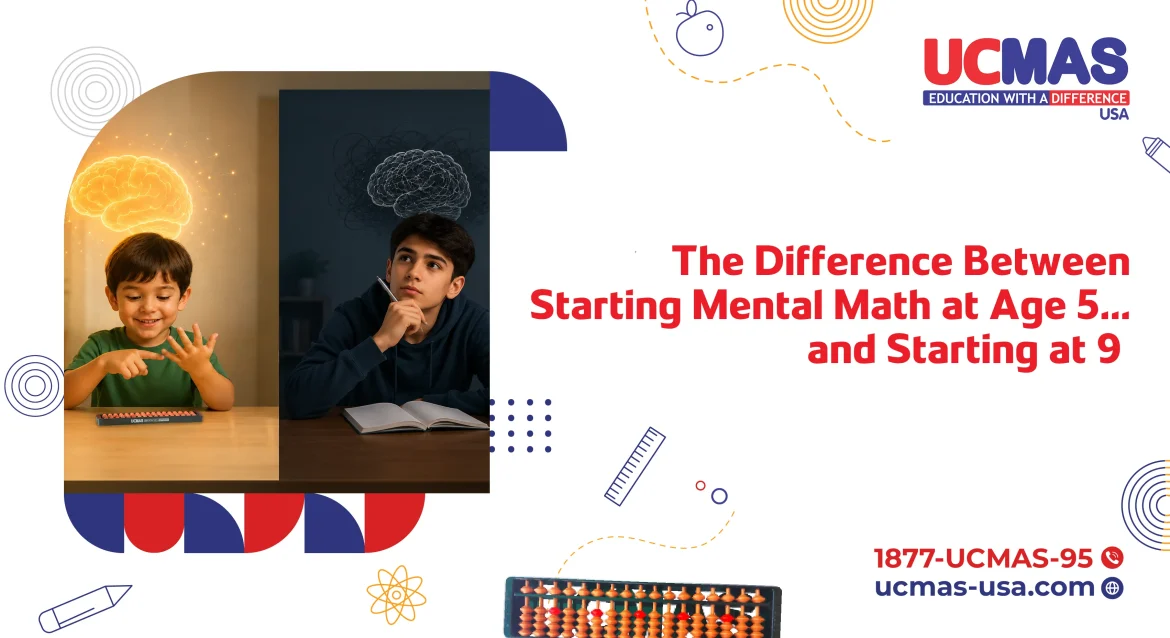
Parents today want to give their children every possible advantage, whether in academics, confidence, or problem-solving. One of the most common questions they ask is: When is the right time to introduce mental math?
The answer is simpler than many think. While every child develops differently, there is a period during early childhood when the brain is especially receptive to learning new skills. Introducing structured mental math during these years can help children develop stronger concentration, visualization, logical thinking, and confidence that continues well beyond mathematics.
At UCMAS, children build these abilities through a scientifically designed abacus program that transforms physical calculations into powerful mental visualization skills.
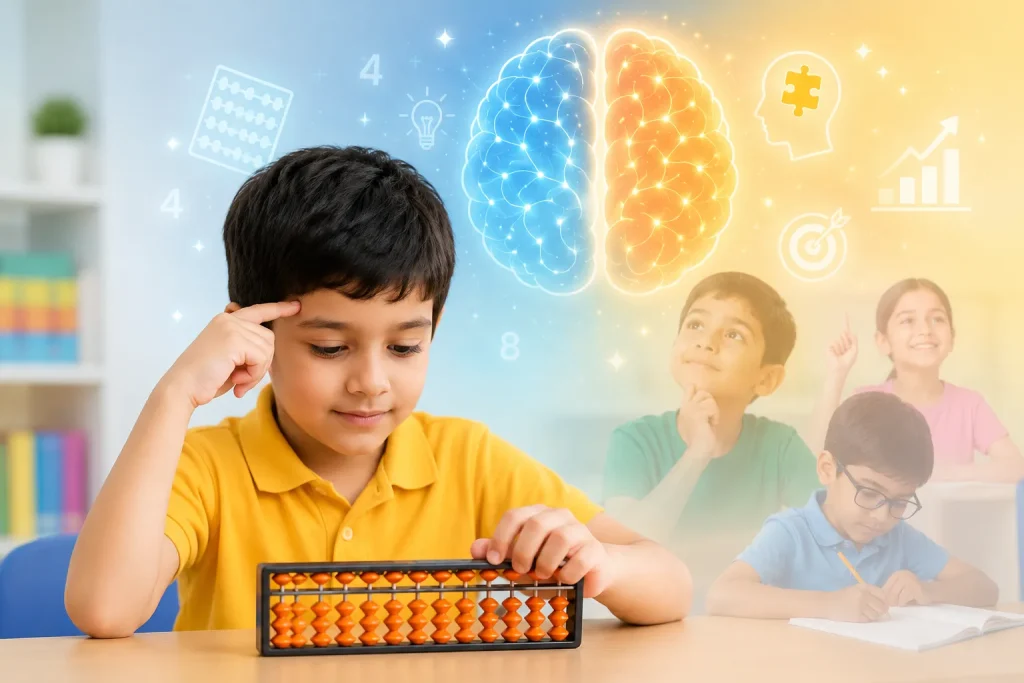
Why Age Matters More Than Parents Realize
Children’s brains grow rapidly during their early years. Between ages four and twelve, neural connections responsible for memory, reasoning, creativity, and learning develop at an incredible pace.
This doesn’t mean children become “too old” after this period. Instead, it means younger learners often absorb concepts more naturally and build stronger long-term habits.
This is why many parents search for the best age to start mental maths before enrolling their children in enrichment programs.
The goal isn’t simply learning faster arithmetic. It’s helping children develop learning skills that improve performance across multiple subjects.
The Ideal Window for Early Learning
So, when should kids start mental math?
Most education experts and child development specialists recommend introducing structured abacus learning between 4 and 7 years of age.
During these years, children:
- Learn through visual patterns
- Enjoy hands-on activities
- Develop concentration naturally
- Build confidence through repetition
- Adapt quickly to structured learning
This age range allows children to transition from using a physical abacus to performing complex calculations mentally with remarkable ease.
If your child is within this range, now is an excellent time to explore the Benefits of starting abacus classes early.
An Abacus Age Guide for Parents
Every child learns differently, but this simple abacus age guide can help parents understand what to expect.
Ages 4–5: Building the Foundation
Children become familiar with numbers, counting, finger coordination, listening skills, and visual learning.
Rather than focusing on speed, instructors build curiosity and confidence.
Ages 6–8: Rapid Skill Development
This is often considered the sweet spot.
Children begin transitioning from physical calculations to visualization, improving memory, attention span, and processing speed simultaneously.
Many parents notice school math becoming easier during this stage.
Ages 9–12: Strong Cognitive Growth
Older children still make excellent progress.
While they may require slightly more practice initially, they often understand concepts faster and apply mental math to classroom learning almost immediately.
The important point is that starting later is always better than never starting at all.
Why Early Mental Math Learning Creates Lasting Benefits
Children don’t attend mental math classes simply to become faster calculators.
Instead, early mental math learning develops skills that support success in nearly every subject.
Some of the biggest benefits include:
- Improved concentration
- Better memory retention
- Stronger visualization abilities
- Increased confidence
- Faster information processing
- Enhanced problem-solving
- Reduced fear of mathematics
Many of these skills continue benefiting children long after they complete the program.
To understand how foundational math influences future academic achievement, read How early math skills influence lifelong success.
Signs Your Child Is Ready
Parents often worry less about age and more about readiness.
A child may be prepared for mental math if they:
- Recognize basic numbers
- Can focus for 20–30 minutes
- Enjoy puzzles or counting games
- Like solving simple challenges
- Follow instructions comfortably
- Show curiosity during learning activities
Children don’t need to excel in mathematics before joining.
In fact, many students enroll simply because parents want to strengthen learning habits before difficulties appear.
If you’re unsure whether additional cognitive support could help, explore Choosing the best brain development program for children.
What If My Child Is Already Struggling in School?
Many parents don’t discover learning challenges until grades begin to slip.
Fortunately, mental math isn’t only for advanced learners.
The structured approach helps children improve focus, confidence, and processing abilities, making classroom learning less overwhelming.
If you’ve noticed declining interest, poor concentration, or inconsistent academic performance, you may want to read the Signs of Learning Gaps During Early School Years.
Early intervention is always easier than correcting deeply established learning habits later.
Why UCMAS Goes Beyond Mathematics
At UCMAS, children don’t simply memorize formulas.
The program combines physical abacus practice with visualization techniques that activate both sides of the brain.
As students progress, they gradually perform calculations mentally while strengthening:
- Memory
- Focus
- Observation
- Listening
- Creativity
- Confidence
- Logical thinking
These improvements naturally extend into classroom performance, examinations, and everyday decision-making.
Parents interested in understanding the learning process can also read How Abacus Training Helps Kids Excel in Math.

It's Never About Starting Early—It's About Starting at the Right Time
Many parents delay enrollment because they believe their child is either too young or not yet “good at math.”
In reality, mental math is designed to help children build these skills from the ground up.
Whether your child is 5, 7, or even 10 years old, consistent training can significantly improve confidence, concentration, and cognitive development.
The sooner healthy learning habits begin, the longer children benefit from them throughout school and beyond.
Give Your Child the Right Start with UCMAS
Every child learns differently, but every child deserves the opportunity to develop stronger thinking skills.
If you’re wondering whether now is the right time, the best next step is speaking with experienced instructors who can assess your child’s readiness and recommend the right learning path.
Book a UCMAS information session and discover how mental math can unlock your child’s full potential.
FAQs
Most children benefit from starting between ages 4 and 7 because their brains are highly receptive to visual learning, memory development, and new concepts. However, children outside this range can also experience significant improvements with consistent practice.
No. Age 4 is an excellent time for many children to begin if they can recognize numbers and follow simple instructions. At this stage, lessons focus on building confidence and learning through engaging, age-appropriate activities.
Absolutely. Older children often grasp concepts quickly and can use mental math to strengthen classroom performance, concentration, and confidence. While they may progress differently than younger learners, the cognitive benefits remain substantial.
Children are generally ready if they show curiosity, recognize basic numbers, enjoy learning activities, and can focus for short periods. A professional assessment from UCMAS instructors can also help determine readiness.
Starting later doesn’t prevent success. Children can still improve memory, logical thinking, concentration, and calculation speed. Beginning earlier may make the learning curve smoother, but consistent practice matters most.
Many parents notice improved focus, greater confidence, better classroom participation, stronger memory, and increased interest in mathematics. Learn more in What Changes Parents See After Mental Math.
Yes. Well-structured online programs provide live instructor guidance, interactive practice, and personalized attention that help beginners learn effectively from home. Explore Online abacus classes for beginners to learn more.
Choose a program with a proven curriculum, experienced instructors, and structured learning pathways. UCMAS offers both classroom and online learning options across multiple locations, making it easier for families to find quality abacus education nearby.